
How to Measure for a Custom Bedroom Wardrobe
- Get Ready: What You Need Before Measuring Your Custom Bedroom Wardrobe
- Why precise measurements matter for your Custom Bedroom Wardrobe
- Tools and materials you'll need when measuring a Custom Bedroom Wardrobe
- How to create a simple room sketch for a Custom Bedroom Wardrobe
- Measuring Width, Height and Depth for a Custom Bedroom Wardrobe
- Checklist: detailed points to capture for a Custom Bedroom Wardrobe
- Planning internal layout for your Custom Bedroom Wardrobe
- Recommended internal dimensions and spacing for a Custom Bedroom Wardrobe (useful reference)
- Account for doors and hardware when measuring a Custom Bedroom Wardrobe
- Handling irregular rooms and obstacles for a Custom Bedroom Wardrobe
- Tolerance and accuracy expectations for a Custom Bedroom Wardrobe
- Common mistakes to avoid when measuring for a Custom Bedroom Wardrobe
- What to send to your manufacturer or designer for a Custom Bedroom Wardrobe quote
- Comparison: Built-in vs. Freestanding Custom Bedroom Wardrobe considerations
- Choose a Trusted Partner for Your Custom Bedroom Wardrobe — Why Murano Stands Out
- MURANO advantages for your Custom Bedroom Wardrobe project
- MURANO main products
- How Murano helps with measurements
- FAQ — Custom Bedroom Wardrobe Measurements
- 1. How accurate do my measurements need to be for a Custom Bedroom Wardrobe?
- 2. What depth should my Custom Bedroom Wardrobe be?
- 3. How do I measure for sliding doors on a Custom Bedroom Wardrobe?
- 4. Should I remove skirting boards before measuring?
- 5. Can I install a Custom Bedroom Wardrobe myself after measuring?
- 6. What if my wall isn't straight?
- References
Get Ready: What You Need Before Measuring Your Custom Bedroom Wardrobe
Accurate measurement is the foundation of any successful Custom Bedroom Wardrobe project. Whether you plan a built-in system, freestanding unit, or a full wall of storage, the more precise your measurements and the clearer your brief, the better the final fit and function. This guide walks you through professional measurement steps, layout decisions, standard dimensions, and practical tips so you can hand reliable data to designers or manufacturers — or verify onsite work with confidence.
Why precise measurements matter for your Custom Bedroom Wardrobe
Custom furniture is only as good as the data behind it. Errors of a few centimeters can cause doors to rub, shelves to be unusable, or wardrobes to not fit between floor and ceiling details. Professional manufacturers expect room sketches, multiple point measurements, and photos of obstacles (radiators, sockets, skirting, coving, sloped ceilings). A small initial investment of careful measuring saves time, money, and rework.
Tools and materials you'll need when measuring a Custom Bedroom Wardrobe
- Tape measure (3–8 m / 10–26 ft) and a laser distance measurer for long runs.
- Spirit level or laser level to verify floors and walls are plumb.
- Notepad or digital device for sketches and notes; grid paper helps.
- Camera or smartphone to photograph walls, ceiling, skirting, and obstacles.
- Masking tape and pencil to mark reference points on floor/wall if needed.
How to create a simple room sketch for a Custom Bedroom Wardrobe
Draw a floor plan showing the wall(s) designated for the wardrobe. Mark doors, windows, radiators, switches, sockets, and any obstructions. Label each wall (A, B, C…), and write the measured length next to it. A clear sketch avoids miscommunication with designers and manufacturers and speeds up quotation.
Measuring Width, Height and Depth for a Custom Bedroom Wardrobe
The three primary dimensions are width (left to right), height (floor to ceiling), and depth (front to back). For accurate fittings, measure each at multiple points and record minimum and maximum values.
- Width: Measure the total run where the wardrobe will sit — take measurements at top, middle and bottom (to detect bowed walls). Use the smallest value for manufacturing allowances.
- Height: Measure floor-to-ceiling at several points and near corners. If there is uneven flooring or ceiling slopes, record the highest and lowest points.
- Depth: Determine desired internal depth for hanging and shelving, then measure available protrusion allowance (especially if space must leave circulation space in front).
Checklist: detailed points to capture for a Custom Bedroom Wardrobe
- Floor type and skirting height (baseboards can reduce effective height).
- Coving, cornice, or ceiling beams that reduce height in areas.
- Power outlets, switches, light fittings, exposed pipes, and radiators.
- Window sills and window reveals that may interrupt a continuous wardrobe run.
- Door swings and required clearances for bedroom doors and wardrobe doors.
- Any planned HVAC vents or in-wall services behind the wardrobe wall.
Planning internal layout for your Custom Bedroom Wardrobe
Decide how you want to store clothing and items before finalizing measurements. Typical allocations include hanging space, shelving, drawers, shoe racks, and special compartments for accessories. Make a simple list of what you own (e.g., 40 shirts, 20 long coats, 15 pairs of shoes) — it helps determine proportions.
Recommended internal dimensions and spacing for a Custom Bedroom Wardrobe (useful reference)
Below is a practical comparison table of standard component dimensions often used by reputable manufacturers, consolidated from industry planning guides (values shown in metric and imperial where common):
| Component | Typical Metric | Typical Imperial | Notes |
|---|---|---|---|
| Single hanging depth (suitable for shirts) | 45–60 cm | 18–24 in | 45 cm for slim profiles; 58–60 cm for bulkier garments (e.g., coats) |
| Shelf depth | 30–40 cm | 12–16 in | Deeper shelves for folded blankets and storage boxes |
| Drawer interior depth | 40–55 cm | 16–22 in | Adjust to typical clothing/folding needs |
| Single hanging height | 100–120 cm | 39–47 in | Short garments (shirts, jackets) |
| Long hanging height | 150–180 cm | 59–71 in | Long coats, dresses; measure longest items you own |
| Walk-in clearance in front | 90–120 cm | 36–48 in | Minimum aisle space for door swings and comfortable access |
Sources for these typical values include manufacturer planning guides such as IKEA's PAX system and interior design planning resources; use them as starting points and adjust for personal needs and local norms.
Account for doors and hardware when measuring a Custom Bedroom Wardrobe
Decide between hinged doors, sliding doors, or open fronts early as each has different space requirements. Hinged doors need swing clearance; sliding doors need additional overhead and floor tracks and may reduce usable internal depth by the thickness of the door. Allow at least 10–20 mm (0.4–0.8 in) for door clearances and hardware, and check handle projection if they will impede bedroom circulation.
Handling irregular rooms and obstacles for a Custom Bedroom Wardrobe
For sloped ceilings, alcoves, or chimneys, measure the profile along the wall at several points and produce a contour sketch or template (cardboard or paper pattern) that can be sent to the manufacturer. Also, measure service runs and junction boxes behind the wall that may require recesses. When in doubt, ask the manufacturer to do a site survey — many reputable brands offer this as part of pre-sales.
Tolerance and accuracy expectations for a Custom Bedroom Wardrobe
Manufacturers typically ask for final measurements with a tolerance of ±3–5 mm for precision-built cabinetry. If you provide rough measurements, expect the manufacturer to either do a site check or build adjustable features (e.g., shims, fill strips). Laser measures and multiple reads improve reliability; always note whether you measured to plaster or to structural wall.
Common mistakes to avoid when measuring for a Custom Bedroom Wardrobe
- Measuring only once — always cross-check measurements at top, middle, bottom.
- Forgetting to note floor or ceiling obstructions (radiators, pipes, beams).
- Not accounting for skirting boards, door architraves or finish layers.
- Assuming walls are perfectly straight — they rarely are.
- Not measuring your existing garments and accessories to define internal needs.
What to send to your manufacturer or designer for a Custom Bedroom Wardrobe quote
Provide:
- A clear floor plan sketch with measured dimensions and notes on materials/finishes you prefer;
- Photos of the wall(s), ceiling junctions, and floor;
- A list of functional requirements (number of hanging rails, drawer count, shoe capacity);
- Any constraints (e.g., windows, radiator, socket locations) and preferred door style.
Manufacturers like Murano also recommend sending a short video walkthrough for complex sites.
Comparison: Built-in vs. Freestanding Custom Bedroom Wardrobe considerations
| Aspect | Built-in Wardrobe | Freestanding Wardrobe |
|---|---|---|
| Fit | Custom-fit to irregularities, needs precise site measurement | Less precise; often modular, easier to move |
| Installation | Requires professional installation and possibly site trimming | Often self-contained; easier DIY assembly |
| Use of space | Can use full height and odd niches efficiently | Limited by standard sizes |
Choose a Trusted Partner for Your Custom Bedroom Wardrobe — Why Murano Stands Out
Foshan Murano Smart Home Co., Ltd., based in Foshan, Guangdong, is a leading custom wardrobe and cabinet brand with over 20 years of expertise. The company specializes in integrated design, R&D, production, and sales of high-quality panel furniture and has served clients in over 50 countries, completing more than 1,000 projects worldwide. Murano offers comprehensive customization services for all home areas, including bedrooms, living rooms, kitchens, and offices, supported by a dedicated pre-sales and after-sales team.
MURANO advantages for your Custom Bedroom Wardrobe project
- Precision production: advanced manufacturing equipment and strict quality control ensure components meet tight tolerances and fit accurately during installation.
- End-to-end service: from concept and measurement verification to production and after-sales support, reducing risk and delivering consistent results.
- Material and design choices: High Quality panels, fittings, and diverse finishes to match décor and functional needs.
- Global experience: over 1,000 completed projects in 50+ countries, showing adaptability to different standards and client expectations.
MURANO main products
Murano’s product range includes Kitchen Cabinet, Bedroom Wardrobe, Interior Doors, Aluminum Frame Glass Door, Bathroom Cabinet, and Wall Panelling. These offerings are designed for cohesive interior solutions so clients can maintain consistent style and quality across multiple rooms.
How Murano helps with measurements
Murano provides pre-sales consultation and can perform onsite surveys where required. For remote clients, they accept detailed sketches, photos, and videos and offer R&D support to adapt designs to local constraints. Their Quality First principle guides both design and material selection to deliver durable, well-fitted custom furniture.
FAQ — Custom Bedroom Wardrobe Measurements
1. How accurate do my measurements need to be for a Custom Bedroom Wardrobe?
Aim for ±3–5 mm accuracy. Measure multiple points (top, middle, bottom) and report the smallest width and height values. If you are uncomfortable, request a professional site survey.
2. What depth should my Custom Bedroom Wardrobe be?
Typical internal depths are 45–60 cm (18–24 in). Choose 45 cm for shirts and folded items; 58–60 cm if you need space for coats or want extra storage room.
3. How do I measure for sliding doors on a Custom Bedroom Wardrobe?
Measure the full width of the opening and the clear height. Also measure headroom above the opening and floor level variations. Sliding doors require accurate head and floor track clearances; communicate any baseboard or threshold heights to the manufacturer.
4. Should I remove skirting boards before measuring?
Do not remove skirting unless you plan to. Measure to the finished floor and note skirting height. Manufacturers will typically allow for skirting with a recessed plinth or will advise on removal if a flush fit is required.
5. Can I install a Custom Bedroom Wardrobe myself after measuring?
Small modular wardrobes may be DIY-friendly, but built-ins or complex systems with precise tolerances are best installed by professionals. Many manufacturers (including Murano) provide installation services to guarantee fit and finish.
6. What if my wall isn't straight?
Record measurements at multiple heights and provide the minimum widths to the manufacturer. Professional installers use scribing, fill strips, or filler panels to create a seamless appearance. For extreme irregularities, a site survey is recommended.
If you need a professional measurement service, a detailed quote, or want to view product options, contact Murano’s pre-sales team to arrange a site survey or send drawings and photos for a remote estimate. Explore Murano’s portfolio of Kitchen Cabinet, Bedroom Wardrobe, Interior Doors, Aluminum Frame Glass Door, Bathroom Cabinet, and Wall Panelling to plan a cohesive home interior solution.
References
- Wardrobe (furniture), Wikipedia. https://en.wikipedia.org/wiki/Wardrobe (accessed 2025-12-11).
- IKEA PAX and wardrobe planning guides. https://www.ikea.com/ (search PAX wardrobe planning) (accessed 2025-12-11).
- Closet Dimensions and Design, The Spruce (closet planning and dimensions guidance). https://www.thespruce.com/ (search closet dimensions) (accessed 2025-12-11).
- Design and measurement advice, Houzz articles on wardrobe and closet planning. https://www.houzz.com/ (search wardrobe planning) (accessed 2025-12-11).
- Foshan Murano Smart Home Co., Ltd. company profile and product offerings (information provided by client materials, accessed 2025-12-11).
Contact Murano to schedule measurement verification, get a tailored quote, or see product samples and finish options.
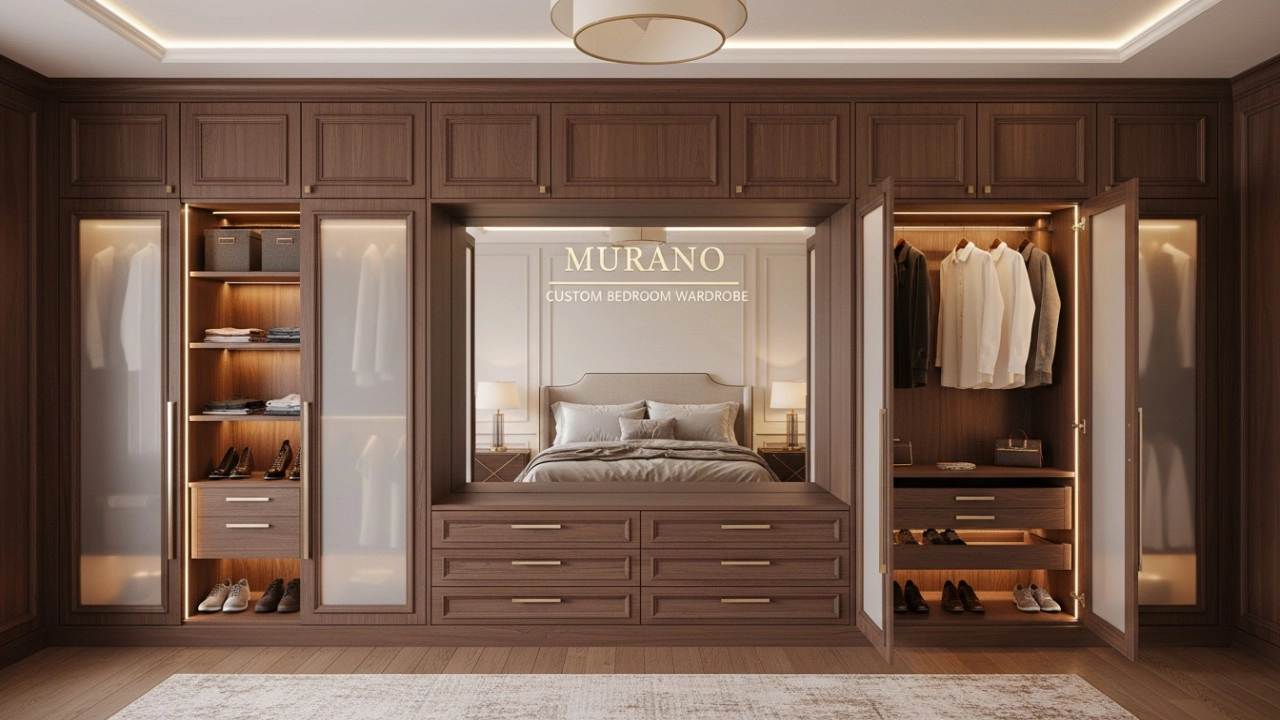
10 Costly Mistakes to Avoid When Designing Your Custom Bedroom Wardrobe in 2026
Modular vs Custom: Choosing Systems for Luxury Closets
Tips for buy diy ensuite vanity
Wholesale modern kitchen cabinet pulls manufacturer and supplier
FAQ
What's lead time for furniture cabinets?
It's about 20 - 30 days.
Can we ship the furniture cabinets to customer's port or city?
Yes. Please provide the city name or port name when you send us an inquiry.
Can we produce products according to customer's room size?
Yes. All our cabinets are custom size.
What's the payment terms of all our products?
T/T (30% inadvance, the balance shall be paid off before delivery), Western Union or L/C.
What information are needed for getting a quote for our furniture cabinets?
Your size infomation or room drawings.
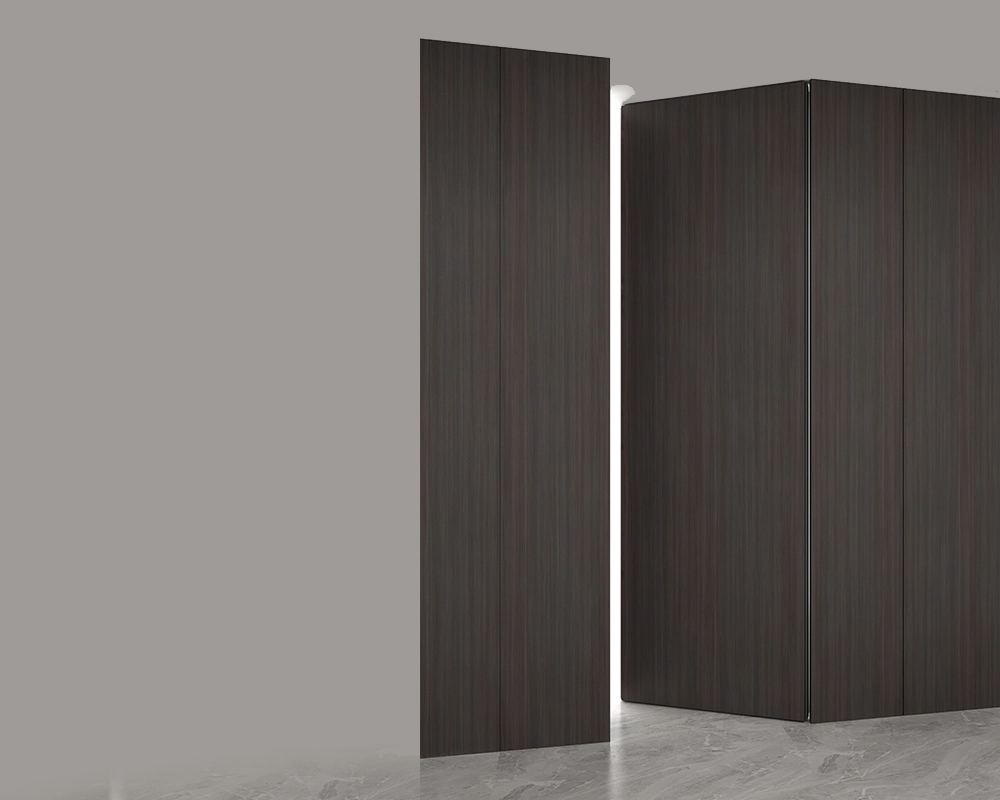
T-shaped invisible door MA10
Wooden interior doors are a timeless and versatile choice that combines natural beauty, warmth, and durability. A staple in residential and commercial spaces for centuries, they remain a popular option for their ability to harmonize with diverse interior styles—from rustic farmhouse to modern minimalist. Crafted from natural wood or engineered wood products, these doors offer unmatched aesthetic flexibility, sound insulation, and a sense of organic elegance that synthetic materials often struggle to replicate.
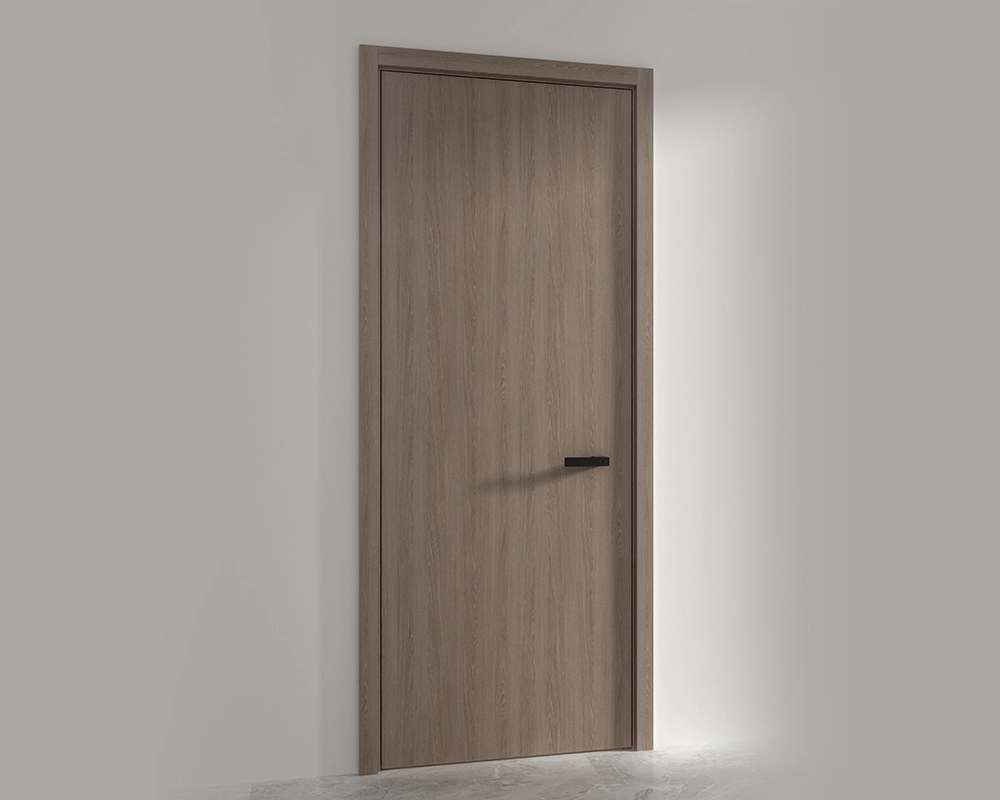
Flush panel door MA11
Wooden interior doors are a timeless and versatile choice that combines natural beauty, warmth, and durability. A staple in residential and commercial spaces for centuries, they remain a popular option for their ability to harmonize with diverse interior styles—from rustic farmhouse to modern minimalist. Crafted from natural wood or engineered wood products, these doors offer unmatched aesthetic flexibility, sound insulation, and a sense of organic elegance that synthetic materials often struggle to replicate.
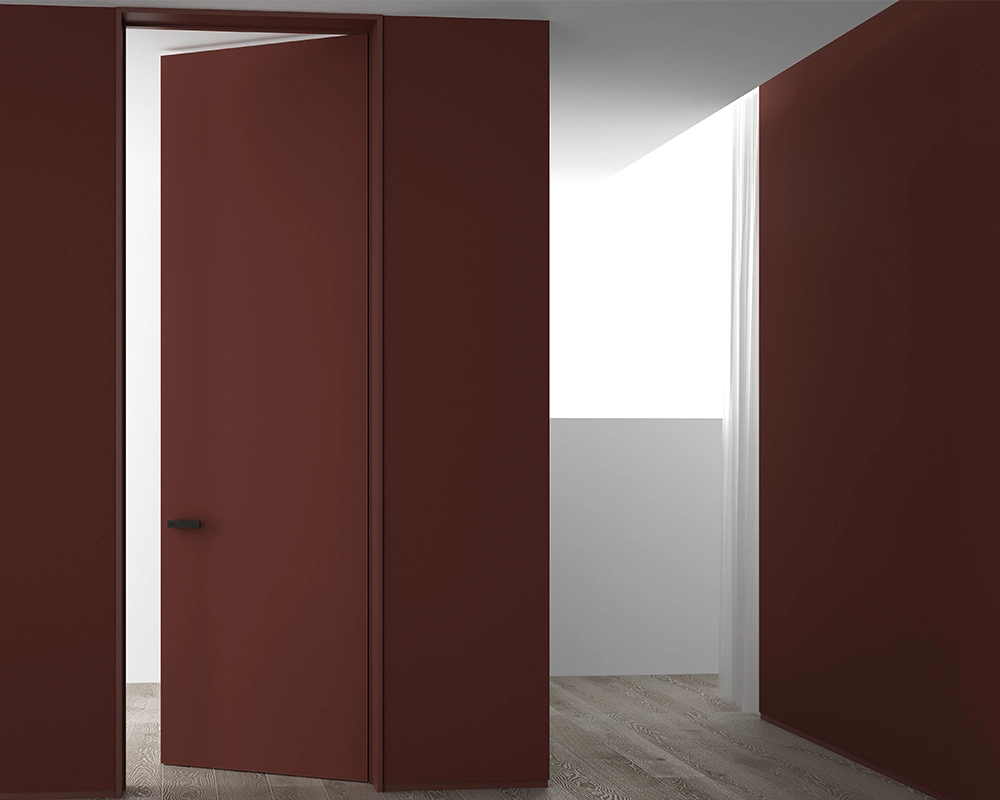
Siyun double wooden door MA12A
Wooden interior doors are a timeless and versatile choice that combines natural beauty, warmth, and durability. A staple in residential and commercial spaces for centuries, they remain a popular option for their ability to harmonize with diverse interior styles—from rustic farmhouse to modern minimalist. Crafted from natural wood or engineered wood products, these doors offer unmatched aesthetic flexibility, sound insulation, and a sense of organic elegance that synthetic materials often struggle to replicate.
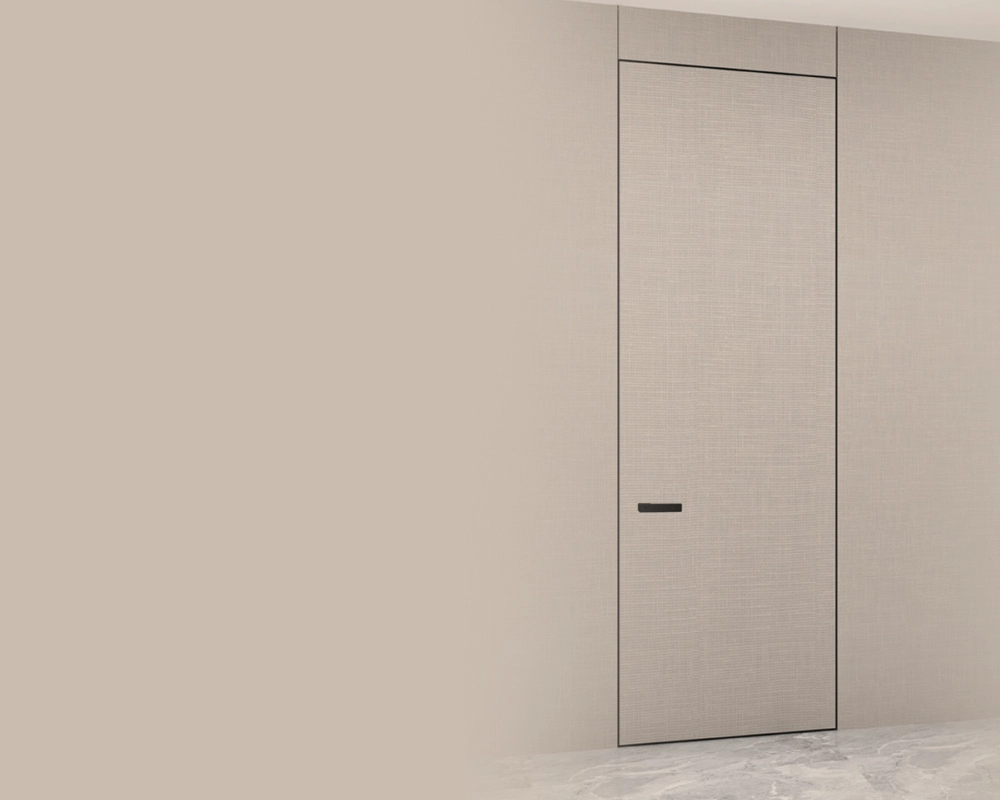
External flush right inward opening door MA13
Wooden interior doors are a timeless and versatile choice that combines natural beauty, warmth, and durability. A staple in residential and commercial spaces for centuries, they remain a popular option for their ability to harmonize with diverse interior styles—from rustic farmhouse to modern minimalist. Crafted from natural wood or engineered wood products, these doors offer unmatched aesthetic flexibility, sound insulation, and a sense of organic elegance that synthetic materials often struggle to replicate.

 Scan QR Code
FoshanMuranoCabinet
foshanmuranocabinet
Whatsapp: +8618814138020
Scan QR Code