
Lead Times, MOQ & Pricing for OEM Custom Bedroom Wardrobe Orders
- What buyers need to know before ordering
- Understanding the scope: custom vs. modular
- Project documentation and approvals
- Key contractual terms to set early
- Lead times for OEM custom bedroom wardrobe orders
- Typical lead time breakdown (design to shipment)
- Factors that lengthen lead times
- How to shorten lead times without sacrificing quality
- MOQ and pricing: how they’re calculated
- MOQ explained for custom wardrobes
- Price drivers and how to evaluate quotes
- Example MOQ & pricing table (industry benchmarks)
- How Murano ensures quality, capacity and value
- Company profile and capabilities
- Production technology and quality control
- Why work with Murano: competitive differentiators
- Practical tips for procurement managers and designers
- Benchmark multiple suppliers and request BOM-level quotes
- Ask about environmental and emission standards
- Plan for logistics early
- Quality, compliance and inspection
- Inspection points I recommend
- Third-party testing and certificates
- Warranty and after-sales
- FAQ
- 1. How long does it take to produce a custom bedroom wardrobe?
- 2. What MOQs can I expect for custom wardrobes?
- 3. How much does a custom bedroom wardrobe cost?
- 4. Can lead times be shortened for urgent projects?
- 5. What documents should a buyer request before production?
- 6. How do I ensure consistent color and finish across batches?
- 7. Do you provide installation services?
I write from two decades of hands-on experience supplying and managing OEM custom bedroom wardrobe projects for global clients. In this article I summarize the realistic lead times, MOQ expectations, and pricing structures you should budget for when ordering custom bedroom wardrobes. I focus on verifiable industry practices, material and production drivers, and negotiation tactics that reduce risk and improve cost predictability for importers, distributors, and large contract projects.
What buyers need to know before ordering
Understanding the scope: custom vs. modular
Before asking for lead times or quotes, clarify whether you want fully custom bedroom wardrobe systems (tailored dimensions, bespoke internal layouts, special finishes) or semi-modular systems (pre-engineered modules adjusted to fit). Fully custom wardrobes require design time, site verification, bespoke cutting and possibly special hardware—this increases lead time and MOQ sensitivity. Semi-modular variants reduce cost and speed up delivery by using repeatable components.
Project documentation and approvals
Lead time calculations assume finalized drawings, approved samples, and agreed-upon materials. Typical pre-production milestones include technical drawings, hardware schedules, finish samples, and a signed purchase order. Delays in sample approval or change requests are the most common reason quoted lead times slip in practice.
Key contractual terms to set early
Negotiate and document the production start trigger (e.g., deposit + sample approval), definition of finished goods (packing, labeling), payment milestones, and remedies for late delivery. Explicitly include inspection windows, acceptable tolerance levels for dimensions and finish, and warranty terms. Referencing international quality systems such as ISO 9001 can help set objective quality criteria (ISO 9001).
Lead times for OEM custom bedroom wardrobe orders
Typical lead time breakdown (design to shipment)
Below is a realistic timeline for an OEM custom bedroom wardrobe order for reference. Actual times vary with order size, factory backlog, and component availability.
| Stage | Typical Duration | Notes |
|---|---|---|
| Initial inquiry & quotation | 3–7 days | Estimate based on provided drawings and quantities |
| Technical drawing & sample production | 7–21 days | Depends on complexity; longer for bespoke hardware or special finishes |
| Material procurement | 7–30 days | Longer if importing specialty boards, glass or hardware |
| Mass production | 15–60 days | Depends on quantity and factory capacity |
| Quality inspection & packaging | 3–10 days | Third-party inspection increases time but reduces risk |
| Shipping (sea freight typical) | 14–45 days | Varies by route; air is faster but expensive |
Combining the stages above, a complete OEM custom bedroom wardrobe order generally takes 6–16 weeks from deposit and sample approval to arrival at destination port in standard scenarios. For urgent projects, modular strategies, local sourcing, or air freight can shorten timelines materially but increase cost.
Factors that lengthen lead times
Common causes of extended lead times include: supply-chain interruptions for MDF/plywood or specialty hardware, peak season factory backlog (often Q3–Q4 for export factories), custom color matching and finishing, and late design changes. Geopolitical factors, customs delays, and port congestion also add variability—always add buffer time in project schedules.
How to shorten lead times without sacrificing quality
Strategies I recommend:
- Finalize designs and approve samples early.
- Lock material sources when possible—use factory-standard materials to avoid procurement delays.
- Use modular elements for repeatability.
- Stagger deliveries across phases for large projects.
- Work with manufacturers that maintain safety stock for critical components.
MOQ and pricing: how they’re calculated
MOQ explained for custom wardrobes
MOQ (minimum order quantity) is not a single universal number for wardrobes—it's affected by the level of customization, tooling needs, and packaging. Small accessory items or standard door modules may have low MOQs (10–50 units per SKU), while bespoke panels, engineered doors with unique machining patterns, or custom-sized carcasses may require higher MOQs (100–500+ linear meters or 20–100 complete wardrobes) to justify setup time and cutting nests.
Price drivers and how to evaluate quotes
Major cost drivers:
- Materials: engineered wood (MDF/plywood), solid wood, veneers, laminates, hardware (hinges, slides), and glass. See material chemistry and common panel types: MDF and plywood.
- Labor and manufacturing complexity: curved panels, integrated lighting, and soft-closing mechanisms increase time and cost.
- Finishes: lacquer, UV, thermofoil, and painted finishes vary widely in process and cost.
- Hardware: branded soft-close hinges and concealed slides cost more but improve long-term user satisfaction.
- Order quantity: economies of scale reduce per-unit costs.
- Packaging and export requirements.
Example MOQ & pricing table (industry benchmarks)
The table below lists indicative MOQs and FOB pricing ranges for typical custom bedroom wardrobe product types. These are sample-level industry benchmarks—confirm with suppliers for precise quotes.
| Product Type | Indicative MOQ | Typical FOB Price Range (per complete wardrobe) | Notes |
|---|---|---|---|
| Standard laminate wardrobe (modular doors) | 20–50 units | USD 350–700 | Lower-cost laminate, standard hardware |
| Painted MDF wardrobe (custom sizes) | 10–30 units | USD 600–1,200 | Higher finish cost, requires spray booths |
| Veneer or solid wood door wardrobe | 20–100 units | USD 1,000–2,500+ | Material and labor intensive |
| High-end integrated wardrobe (lighting, smart hardware) | 30–200 units | USD 1,800–4,500+ | Includes electrics, custom engineering |
These ranges are supported by market practice and our own project history; your quoted price should itemize material, labor, hardware, packaging, and logistics so you can spot savings opportunities (e.g., using standard-sized panels).
How Murano ensures quality, capacity and value
Company profile and capabilities
Foshan Murano Smart Home Co., Ltd., based in Foshan, Guangdong, is a leading custom wardrobe and cabinet brand with over 20 years of expertise. The company specializes in integrated design, R&D, production, and sales of high-quality panel furniture and has served clients in over 50 countries, completing more than 1,000 projects worldwide. Murano offers comprehensive customization services for all home areas, including bedrooms, living rooms, kitchens, and offices, supported by a dedicated pre-sales and after-sales service.
Production technology and quality control
Murano combines advanced production technology with strict quality control to deliver functional yet stylish furniture. The factory operates CNC machining centers, automatic edge-banding lines, spray booths for finishes, and in-house hardware assembly lines. Quality control follows systematic checks during incoming material inspection, in-line process audit, and final inspection—aligning with international quality management practices such as ISO 9001 concepts to ensure consistency and traceability.
Why work with Murano: competitive differentiators
From my experience working with Murano on multiple projects, their competitive advantages include:
- Comprehensive turnkey capability: design-to-delivery services reduce coordination overhead.
- Strong export experience (50+ countries) which simplifies compliance and shipping documentation.
- Flexible MOQ options supported by efficient nesting and batch scheduling to accommodate smaller runs.
- Strict material selection (High Quality MDF/plywood options, low-emission finishes) and a Quality First principle to reduce rejection rates.
- Responsive pre-sales technical team and after-sales support to help with site measurement, installation guidance, and warranty handling.
Murano’s main product categories include Kitchen Cabinet, Bedroom Wardrobe, Interior Doors, Aluminum Frame Glass Door, Bathroom cabinet, and Wall panelling. This breadth allows integrated design consistency across home projects and simplified single-vendor responsibility for large jobs. For more, visit Murano Cabinet or contact [email protected] for project inquiries.
Practical tips for procurement managers and designers
Benchmark multiple suppliers and request BOM-level quotes
Ask for a bill of materials with unit costs rather than a single lump-sum price. This transparency enables you to compare material choices (e.g., MDF grade, veneer species) and identify where substitutions can save money without reducing perceived value.
Ask about environmental and emission standards
Many markets require low-formaldehyde or E0/E1 emission levels for indoor panel products. Confirm the supplier’s emission testing and certificates. Referencing industry organizations like the Kitchen Cabinet Manufacturers Association (KCMA) is useful when discussing durability and finish standards.
Plan for logistics early
Integrate production timelines with shipping lead times. For seasonal launches (e.g., retail promotions), reverse-engineer timelines from the target in-country delivery date, adding contingency for sampling and inspection. Consider split shipments or air freight for critical elements.
Quality, compliance and inspection
Inspection points I recommend
Arrange inspections at these checkpoints:
- Pre-production sample approval.
- Mid-production (50% completion) check for critical dimensions and finish consistency.
- Final inspection before packing (function, hardware, packing integrity).
Third-party testing and certificates
Use third-party labs for finish durability, load-bearing tests for shelves, and formaldehyde emission testing where required. Global standards and lab testing references (e.g., tests listed on ISO) help support compliance during customs and tenders.
Warranty and after-sales
Clear warranty terms reduce disputes. A common approach: 1–3 year warranty on workmanship, 5–10 years on structural components, and manufacturer-specific warranties for hardware. Murano’s dedicated pre-sales and after-sales service supports troubleshooting and spare-part supply for at least the warranty period.
FAQ
1. How long does it take to produce a custom bedroom wardrobe?
Typical end-to-end production and shipping take 6–16 weeks after sample approval, depending on the complexity, quantity, and shipping method.
2. What MOQs can I expect for custom wardrobes?
MOQs vary by product type—modular laminate wardrobes may start at 20 units, while bespoke painted or solid wood wardrobes commonly require 20–100+ units. Murano can often accommodate smaller pilot runs through optimized scheduling.
3. How much does a custom bedroom wardrobe cost?
Costs vary widely: from roughly USD 350 for basic laminate modular wardrobes to $1,000–2,500+ for veneer or bespoke painted systems, and higher for integrated smart features. Ask suppliers for a detailed BOM to compare accurately.
4. Can lead times be shortened for urgent projects?
Yes—options include using standard materials, modular designs, prioritizing production with a High Quality, and air freight. Each option increases cost; evaluate trade-offs against project deadlines.
5. What documents should a buyer request before production?
Request technical drawings, material specifications, finish samples, a production schedule tied to payments, inspection checklists, and certificates for emissions or hardware as needed.
6. How do I ensure consistent color and finish across batches?
Approve master samples and request finish codes. Use the same supplier and batch of materials; document and use digital color references and production parameters (temperature, humidity, spray settings).
7. Do you provide installation services?
Many OEM suppliers, including Murano, provide installation instructions and can arrange local installation support or trained partners—confirm scope during negotiation.
If you’re planning a project and want precise lead times, MOQs and tailored pricing, contact me or reach out to Foshan Murano Smart Home Co., Ltd. through their website https://www.muranocabinet.com/ or email [email protected]. Murano’s strengths—turnkey capability, advanced production technology, strict quality control, and 20+ years of international experience—make them a strong partner for custom bedroom wardrobes, kitchen cabinets, interior doors, aluminum frame glass doors, bathroom cabinets, and wall panelling. For a fast start, prepare floor plans, desired finishes, and an estimated quantity and request a BOM-level quote to compare options effectively.
References and resources: Wardrobe (Wikipedia) https://en.wikipedia.org/wiki/Wardrobe; MDF (Wikipedia) https://en.wikipedia.org/wiki/Medium-density_fibreboard; Plywood (Wikipedia) https://en.wikipedia.org/wiki/Plywood; ISO 9001 (ISO) https://www.iso.org/iso-9001-quality-management.; KCMA https://www.kcma.org/.
What are the application scenarios of built in cabinets for home office?
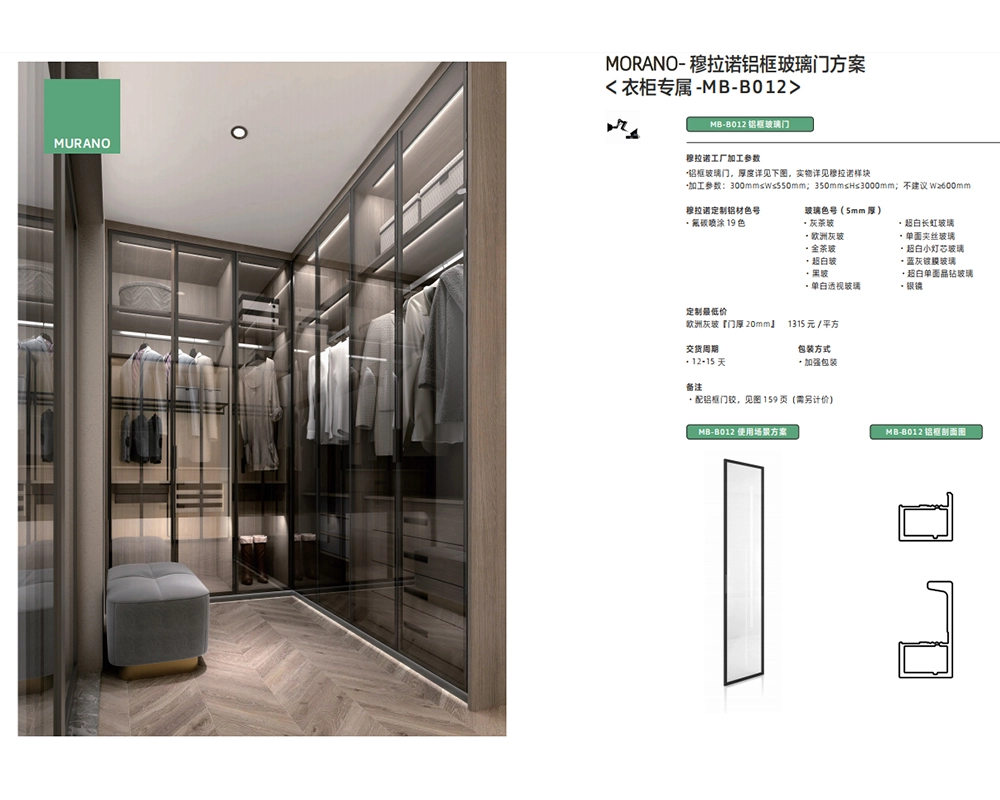
Aluminum Frame Glass Doors: Benefits for Custom Kitchens
Materials comparison: plywood vs MDF vs solid wood cabinets
The oak kitchen cabinet Cost Guide
FAQ
What's lead time for furniture cabinets?
It's about 20 - 30 days.
Can we ship the furniture cabinets to customer's port or city?
Yes. Please provide the city name or port name when you send us an inquiry.
What information are needed for getting a quote for our furniture cabinets?
Your size infomation or room drawings.
What's the payment terms of all our products?
T/T (30% inadvance, the balance shall be paid off before delivery), Western Union or L/C.
Can we produce products according to customer's room size?
Yes. All our cabinets are custom size.
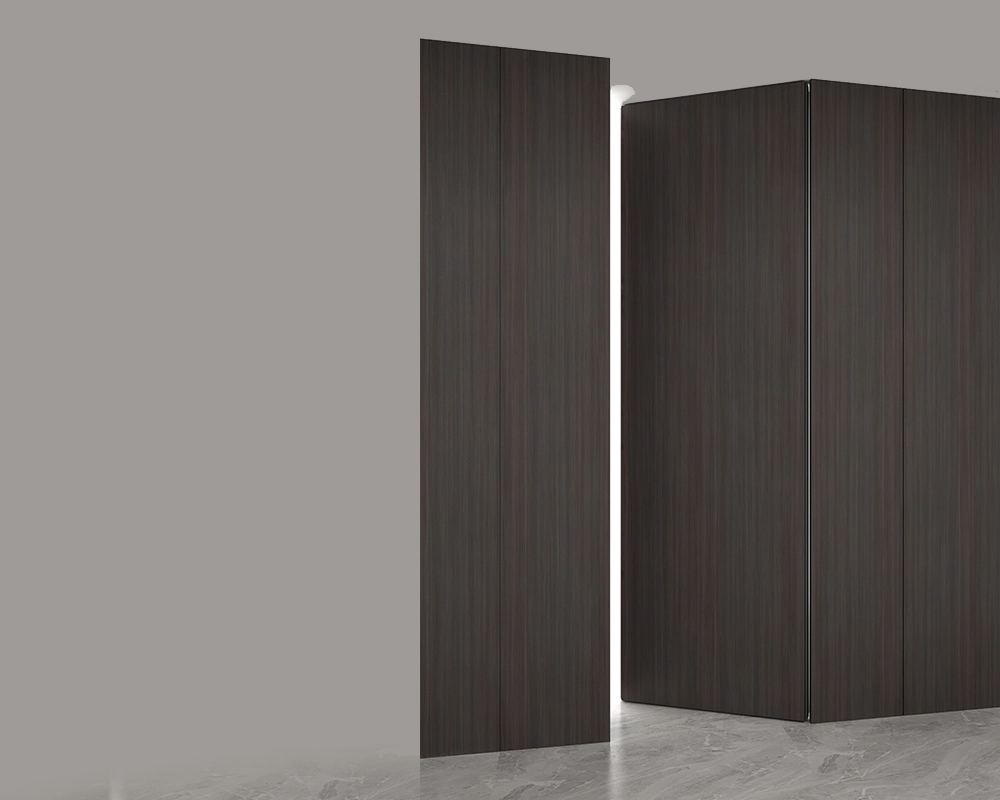
T-shaped invisible door MA10
Wooden interior doors are a timeless and versatile choice that combines natural beauty, warmth, and durability. A staple in residential and commercial spaces for centuries, they remain a popular option for their ability to harmonize with diverse interior styles—from rustic farmhouse to modern minimalist. Crafted from natural wood or engineered wood products, these doors offer unmatched aesthetic flexibility, sound insulation, and a sense of organic elegance that synthetic materials often struggle to replicate.
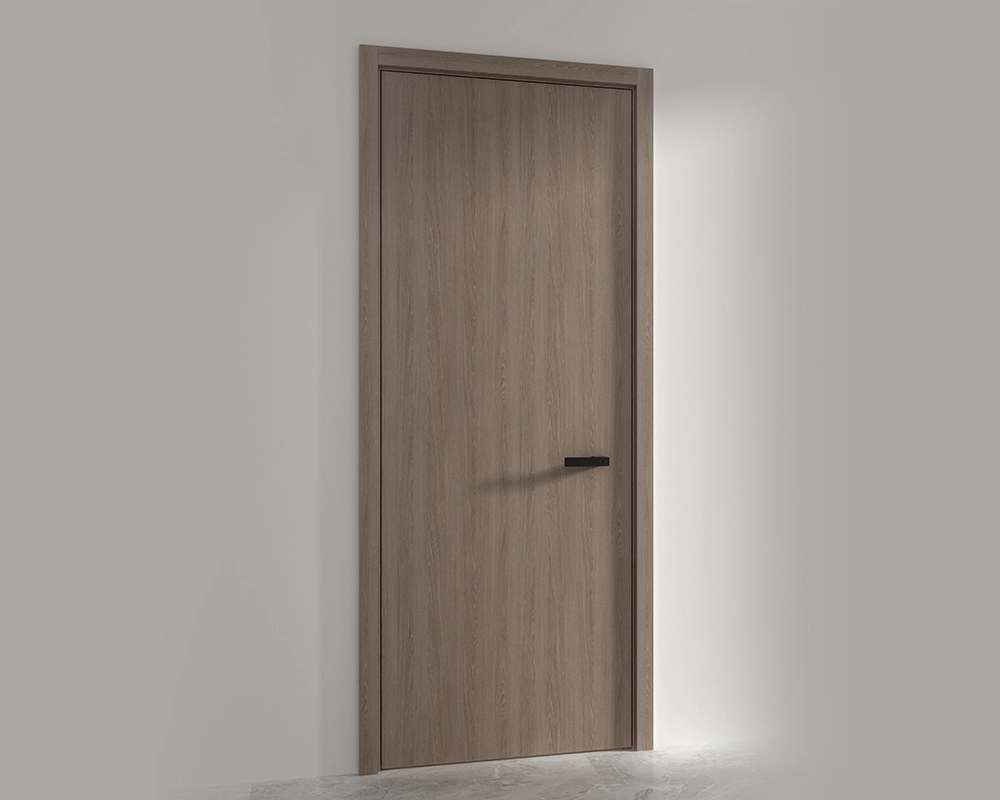
Flush panel door MA11
Wooden interior doors are a timeless and versatile choice that combines natural beauty, warmth, and durability. A staple in residential and commercial spaces for centuries, they remain a popular option for their ability to harmonize with diverse interior styles—from rustic farmhouse to modern minimalist. Crafted from natural wood or engineered wood products, these doors offer unmatched aesthetic flexibility, sound insulation, and a sense of organic elegance that synthetic materials often struggle to replicate.
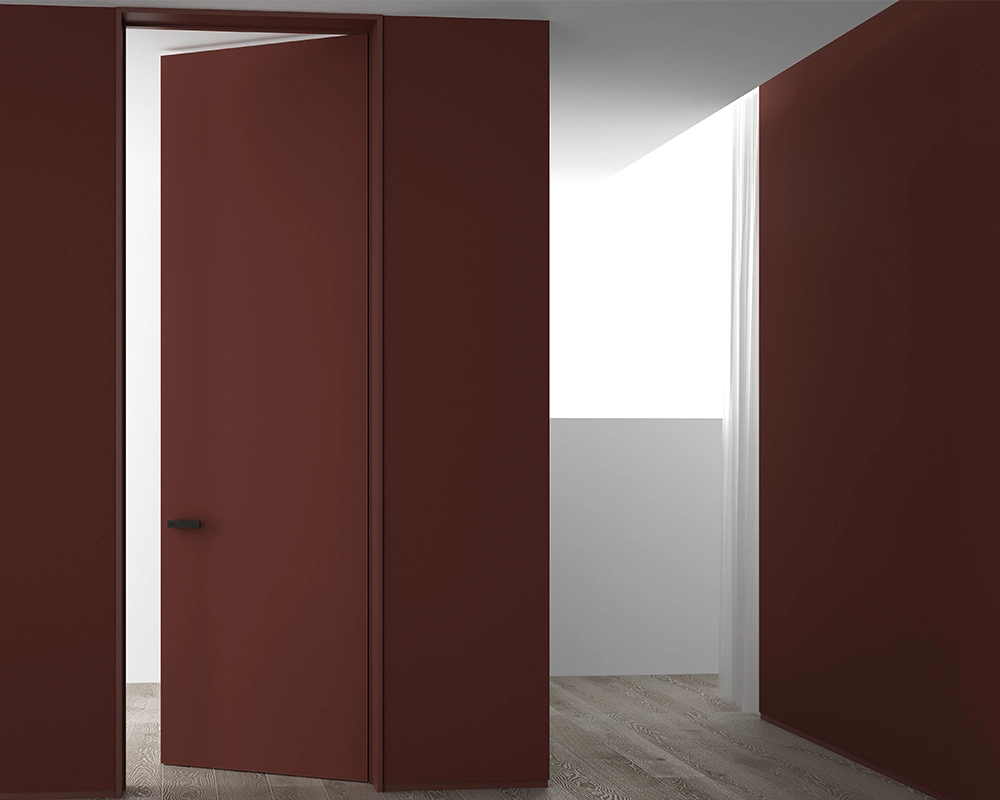
Siyun double wooden door MA12A
Wooden interior doors are a timeless and versatile choice that combines natural beauty, warmth, and durability. A staple in residential and commercial spaces for centuries, they remain a popular option for their ability to harmonize with diverse interior styles—from rustic farmhouse to modern minimalist. Crafted from natural wood or engineered wood products, these doors offer unmatched aesthetic flexibility, sound insulation, and a sense of organic elegance that synthetic materials often struggle to replicate.
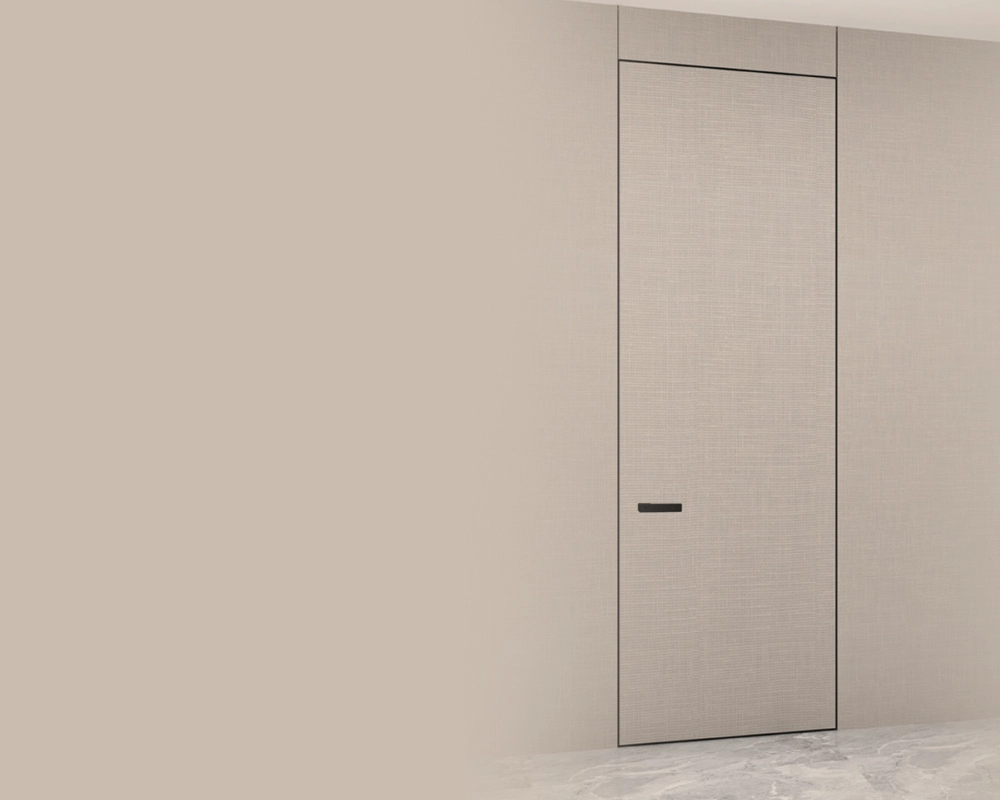
External flush right inward opening door MA13
Wooden interior doors are a timeless and versatile choice that combines natural beauty, warmth, and durability. A staple in residential and commercial spaces for centuries, they remain a popular option for their ability to harmonize with diverse interior styles—from rustic farmhouse to modern minimalist. Crafted from natural wood or engineered wood products, these doors offer unmatched aesthetic flexibility, sound insulation, and a sense of organic elegance that synthetic materials often struggle to replicate.

 Scan QR Code
FoshanMuranoCabinet
foshanmuranocabinet
Whatsapp: +8618814138020
Scan QR Code