
7 Costly Custom Bedroom Wardrobe Mistakes to Avoid [Save Thousands]
- What Is a Custom Bedroom Wardrobe?
- Key Takeaways: Protecting Your Custom Wardrobe Investment
- Mistake #1: Failing to Measure for Depth and Clearance
- Mistake #2: Choosing the Wrong Core Materials
- Mistake #3: Poor Internal Configuration and Ergonomics
- Mistake #4: Ignoring Integrated Lighting Systems
- Mistake #5: Forgetting to Future-Proof the Design
- Mistake #6: Overlooking Proper Ventilation
- Mistake #7: Attempting a DIY Installation to Cut Costs
- Frequently Asked Questions
- How much does a custom bedroom wardrobe cost in 2026?
- Does a custom wardrobe add value to a home?
- MDF vs. Solid Wood: Which is better for custom wardrobes?
- How deep should a custom bedroom wardrobe be?
- Can you install a custom wardrobe on carpet?
- What are the best doors for a small bedroom wardrobe?
- How do you ventilate a built-in wardrobe?
- How long does it take to build and install a custom wardrobe?
- Conclusion
Investing in a bespoke built-in wardrobe is one of the most effective ways to elevate your bedroom's functionality, organization, and overall aesthetic. However, without meticulous planning, homeowners frequently fall victim to custom closet design errors that waste valuable space and drain remodeling budgets. Whether you are fully renovating a primary suite or simply upgrading a guest room, understanding proper wardrobe internal configuration is absolutely essential. By proactively avoiding these seven costly mistakes, you will preserve your custom wardrobe cost ROI and ensure you get the absolute best bedroom storage solutions tailored perfectly to your lifestyle.
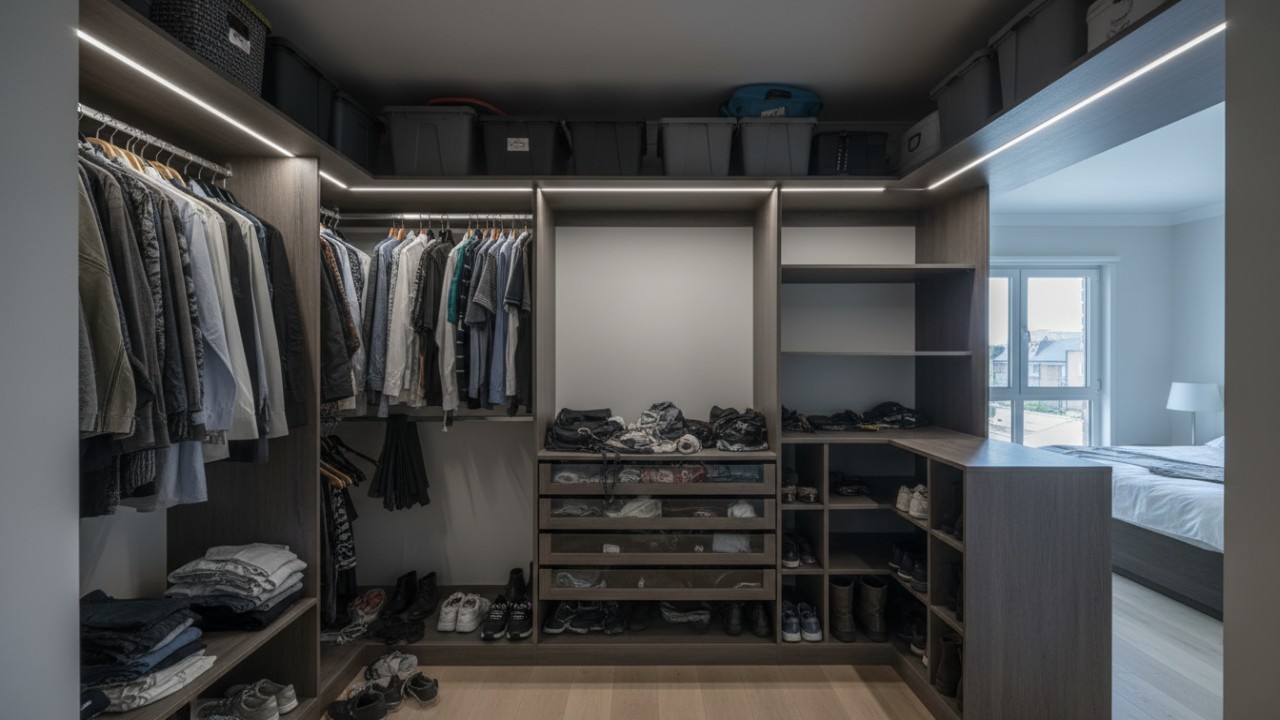
What Is a Custom Bedroom Wardrobe?
A custom bedroom wardrobe is a tailored storage solution designed specifically for your exact space, aesthetic preferences, and organizational needs, which unlike freestanding units, integrates seamlessly into your room's architecture to maximize every available inch of the footprint.
These personalized installations offer several distinct advantages over traditional, off-the-shelf cabinetry:
- Seamless Integration: They mold to your room's exact dimensions, flawlessly accommodating sloped ceilings, uneven floors, or awkward architectural alcoves.
- Maximized Capacity: Every cubic inch is purposefully utilized through specialized hanging zones, custom-depth drawers, and space-saving vertical shelving.
- Premium Upgrades: High-end features like integrated LED lighting, soft-close hinges, and velvet-lined jewelry trays drastically elevate the daily luxury experience.
Key Takeaways: Protecting Your Custom Wardrobe Investment
Protecting your custom wardrobe investment requires precise measurements, strategic internal planning, and selecting durable core materials that balance aesthetics with daily ergonomics to ensure a long-lasting installation that significantly increases your property's resale value.
To safeguard your financial investment and ensure flawless functionality, always adhere to these core principles:
- Measure Twice: Always account for architectural anomalies, floor levels, and the precise door clearances required for unhindered room navigation.
- Balance Space: Balance your primary hanging space with proper drawer depths, shoe storage, and shelving ergonomics to accommodate a diverse clothing collection.
- Plan for the Future: Don't overlook the critical importance of internal lighting systems and future-proof modular technology for 2026 and beyond.
Mistake #1: Failing to Measure for Depth and Clearance
Failing to measure for depth and clearance is a critical error where ignoring door swings or internal dimensional requirements completely ruins your room's functional flow and prevents the proper storage of bulky items like winter coats.
Many homeowners fall into the trap of purely focusing on width and height while neglecting the internal depth required for their specific garments. Ignoring door clearance, especially when deciding between traditional hinged doors and space-saving sliding doors, can make your room feel cramped and restrictive. If depth is insufficient, sliding doors can catch and tear clothing, while hinged doors may physically collide with your bed or nightstands.
To avoid these frustrating spacing issues:
- Visualize the Footprint: Always map out the floor plan with painter's tape to visualize the wardrobe's exact footprint before finalizing your structural dimensions.
- Check Hanger Widths: Ensure a minimum internal depth of 24 inches for standard hanging, or up to 28 inches if you own excessively bulky outerwear.
- Assess Traffic Flow: Maintain at least 36 inches of clear walking space between the wardrobe doors and the nearest piece of bedroom furniture.
Mistake #2: Choosing the Wrong Core Materials
Choosing the wrong core materials, such as cheap particleboard, is a detrimental mistake that often leads to sagging shelves, warped frames, and broken hinges within a few short years due to a lack of structural and climatic resilience.
Failing to account for the specific bedroom climate and seasonal humidity fluctuations can cause natural wood to warp and cheaper paints to peel prematurely. When designing a premium bespoke built-in wardrobe, internal stability is paramount. According to the Architectural Woodwork Institute, high-quality architectural Medium Density Fiberboard (MDF) is recognized as one of the most dimensionally stable core materials available, resisting the warping and cracking that frequently affects solid wood in environments with fluctuating temperatures.
- Prioritize Density: High-density core panels securely hold screws and hinges, preventing doors from dropping over time.
- Climate Resistance: Select thermally fused laminates or sealed MDF to block moisture penetration.
- Case Study: At Foshan Murano Smart Home Co., Ltd. (MURANO), our 20+ years of integrated design expertise across more than 1,000 global projects has proven that utilizing premium, climate-resistant panel furniture materials ensures decades of structural integrity and forcefully protects your overall investment.
Mistake #3: Poor Internal Configuration and Ergonomics
Poor internal configuration occurs when a design prioritizes generic long hanging space over highly efficient double hanging sections or adjustable shelving, drastically reducing the premium feel and daily usability of your personalized storage system.
A frequent and highly frustrating error is leaving out specialized storage compartments. Without dedicated shoe racking, tie racks, or velvet-lined jewelry drawers, small accessories become cluttered, negating the organizational benefits of the new installation. A highly tailored wardrobe internal configuration maximizes usability by categorizing garments by length, season, and frequency of use.
- Double Hanging: Utilize vertical space efficiently by installing two tiers of hanging rods for shorter items like shirts, blouses, and trousers.
- Ergonomic Placement: Keep your everyday workwear and casual items at natural eye level, while storing out-of-season garments on the highest, harder-to-reach shelves.
- Comprehensive Audit: Audit your current clothing and accessory inventory comprehensively before designing the wardrobe internals to ensure every single item has a dedicated, logically placed home.
Mistake #4: Ignoring Integrated Lighting Systems
Ignoring integrated lighting systems is a major functional flaw that forces you to rely solely on ambient bedroom lighting, making it difficult to locate dark clothing and requiring incredibly expensive electrical retrofits after the cabinetry is already installed.
Relying on a single ceiling light casts harsh shadows directly into the closet, severely hindering visibility. Planning hardwired LED systems from day one is far more cost-effective and aesthetically pleasing. Modern bedroom storage solutions must illuminate the interior evenly to showcase your collection.
- Hardwired LEDs: Install sleek, recessed LED strip lighting within the clothing rods and vertically along the shelving partitions.
- Sensor Activation: Utilize integrated motion sensors so the interior lights activate instantly and automatically whenever the cabinet doors are opened.
- Look Ahead: Consider smart, automated wardrobe lighting trends emerging for 2026, such as tunable white lighting that mimics natural daylight, to further elevate the luxury experience.
Mistake #5: Forgetting to Future-Proof the Design
Forgetting to future-proof the design happens when you hyper-customize the internal layout strictly for today's exact clothing collection, making the space completely unusable as your personal style evolves or your family's organizational requirements inevitably change over time.
What works perfectly for an expansive shoe collection today might be entirely useless if the room is later converted into a nursery or guest suite. By incorporating modular internals and highly adjustable shelving, you empower the closet to adapt gracefully to any future organizational requirements.
- Modular Internals: Always incorporate standardized, modular hardware systems that can be easily repositioned, added to, or swapped out entirely without requiring professional remodeling.
- Adjustable Shelving: Ensure all flat shelves use precision-drilled adjustable peg systems rather than permanent, fixed wooden joints.
- Resale Value: An adaptable, bespoke built-in wardrobe inherently appeals to a much wider range of prospective buyers, adding significantly more home resale value than a rigidly hyper-specific configuration.
Mistake #6: Overlooking Proper Ventilation
Overlooking proper ventilation inside closed cabinetry creates a stagnant air environment, effectively turning the closet into a breeding ground for musty odors, mold growth, and long-term fabric damage that destroys your most expensive garments.
Closed cabinetry without adequate airflow traps ambient moisture, particularly in humid geographical regions or homes with en-suite bathrooms. The Environmental Protection Agency strongly recommends maintaining indoor humidity levels below 60 percent to prevent biological pollutants from thriving in dark, enclosed spaces like closets. Furthermore, according to the World Health Organization, occupants of persistently damp or moldy indoor environments face a substantially increased risk of adverse respiratory symptoms.
To effectively combat moisture and preserve your casework:
- Passive Venting: Integrate passive ventilation solutions such as stylish louvered doors, breathable mesh inserts, or subtle internal venting systems placed at the top and bottom of the unit.
- Air Gaps: Never place a fully sealed custom wardrobe tight against an uninsulated, cold exterior wall without incorporating protective air gaps to prevent condensation.
- Avoid Overpacking: Do not pack clothing too tightly on the hanging rails; leave adequate space to allow air to circulate freely among the fabrics.
Mistake #7: Attempting a DIY Installation to Cut Costs
Attempting a DIY installation to cut costs is one of the most severe structural errors, often resulting in ruined high-end materials, unlevel floor installations, completely voided warranties, and massive hidden expenses that erase any initial upfront savings.
While flat-pack, off-the-shelf kits may seem cheaper initially, the long-term ROI, aesthetic finish, and structural durability pale in comparison to a professionally engineered, fully bespoke unit. DIY installations frequently suffer from misaligned doors, sagging center panels, and improper anchoring, which can pose serious safety hazards.
- Precision Engineering: Professional installers utilize laser levels and specialized carpentry tools to guarantee perfectly flush framing, even on noticeably uneven bedroom floors or bowed walls.
- Warranty Protection: Expert installation ensures that your premium materials, mechanical drawer slides, and soft-close hardware remain fully protected under the manufacturer's warranty.
- Superior ROI: Partnering with expert designers and manufacturers like MURANO ensures structural safety and perfect finishing, saving you from highly expensive tear-outs down the road and fiercely protecting your overall custom wardrobe cost ROI.
Frequently Asked Questions
How much does a custom bedroom wardrobe cost in 2026?
Understanding precise cost breakdowns helps homeowners set realistic budgets, as prices vary heavily based on material quality, overall dimensional size, and the inclusion of luxury technological features like integrated LED lighting and custom glass doors. Expect to invest anywhere from $2,500 for high-quality basic modular systems to well over $12,000 for premium, fully bespoke timber and glass designs.
Does a custom wardrobe add value to a home?
Yes, professionally installed built-in wardrobes consistently offer a very high return on investment when selling a home by dramatically improving the functional appeal of the property. Prospective buyers highly appreciate optimized, turnkey storage solutions, particularly in smaller bedrooms where maximizing square footage is a primary selling point.
MDF vs. Solid Wood: Which is better for custom wardrobes?
Both materials serve distinct purposes; solid wood offers unmatched durability, immense physical strength, and a traditional premium feel specifically favored for classic high-end builds. However, high-quality architectural MDF is often preferred for painted modern finishes because it completely resists the natural warping, expansion, and cracking that affects natural wood.
How deep should a custom bedroom wardrobe be?
The standard internal depth for a highly functional reach-in wardrobe is 24 inches to comfortably accommodate standard clothing hangers without the sleeves brushing against the closed doors. Depth can and should be meticulously customized depending on whether you are using thick sliding door track systems or predominantly storing bulky winter outerwear.
Can you install a custom wardrobe on carpet?
While it is technically possible, it is highly recommended to install heavy custom wardrobes directly onto hard flooring surfaces or the structural subfloor. Bypassing the plush carpet prevents the heavy unit from settling unevenly over time, ensures perfectly level cabinet doors, and completely avoids long-term structural shifting.
What are the best doors for a small bedroom wardrobe?
Sliding doors are generally considered the absolute ideal choice for tight bedroom spaces as they require zero outward clearance to open, preserving your walking paths. Bi-fold doors are another excellent, space-conscious option designed to maximize your visual access to the wardrobe internals without taking up too much of the room's footprint.
How do you ventilate a built-in wardrobe?
You can incorporate passive ventilation through the use of stylish louvered doors or by installing subtle, decorative air vents at the top and bottom of the cabinetry baseboards. Additionally, ensure you do not pack clothing too tightly on the rails, allowing ambient air to circulate freely and naturally among the hanging garments.
How long does it take to build and install a custom wardrobe?
The comprehensive design, precise measuring, and detailed manufacturing phase typically takes anywhere from 4 to 8 weeks depending entirely on specific material availability and customization complexity. The actual professional on-site installation usually takes 1 to 3 days depending on the size of the unit and the intricacy of the internal configuration.
Conclusion
Designing a custom bedroom wardrobe is a major financial investment, but proactively avoiding these seven common structural and planning mistakes ensures you receive a beautiful, highly functional, and long-lasting storage solution that elevates your daily routine. By strictly prioritizing accurate room measurements, high-quality resilient materials, proper internal ventilation, and professional installation, you can definitively maximize your bedroom's available space and significantly boost your home's overall market value.
Contact Foshan Murano Smart Home Co., Ltd. today to discuss your specific needs.
Custom Doors & Glass Options for Luxury Walk-In Closets
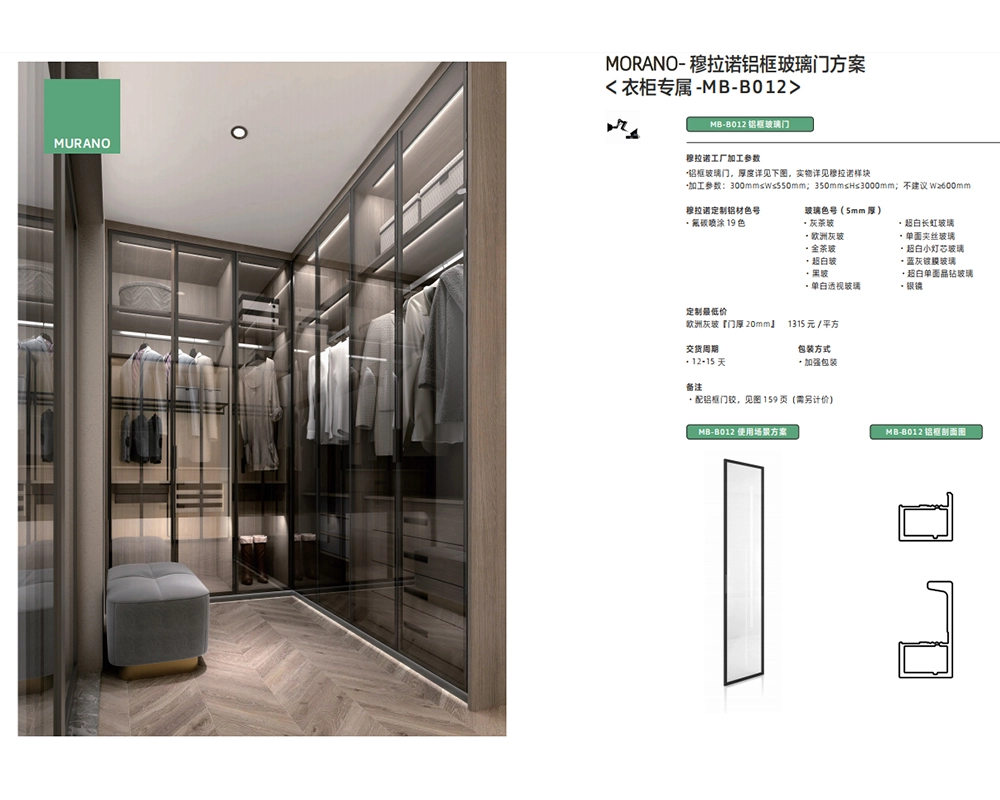
How to Choose Glass Types for Aluminum Frame Cabinet Doors
The latest trends for freestanding laundry drying cabinet | MURANO Ultimate Insights
Custom kitchen cabinet design ideas for small kitchens
FAQ
What's lead time for furniture cabinets?
It's about 20 - 30 days.
Can we produce products according to customer's room size?
Yes. All our cabinets are custom size.
What's the payment terms of all our products?
T/T (30% inadvance, the balance shall be paid off before delivery), Western Union or L/C.
What's MOQ for our kitchen cabinets, wardrobe cabinets or bathroom cabinets?
1 set.
What information are needed for getting a quote for our furniture cabinets?
Your size infomation or room drawings.
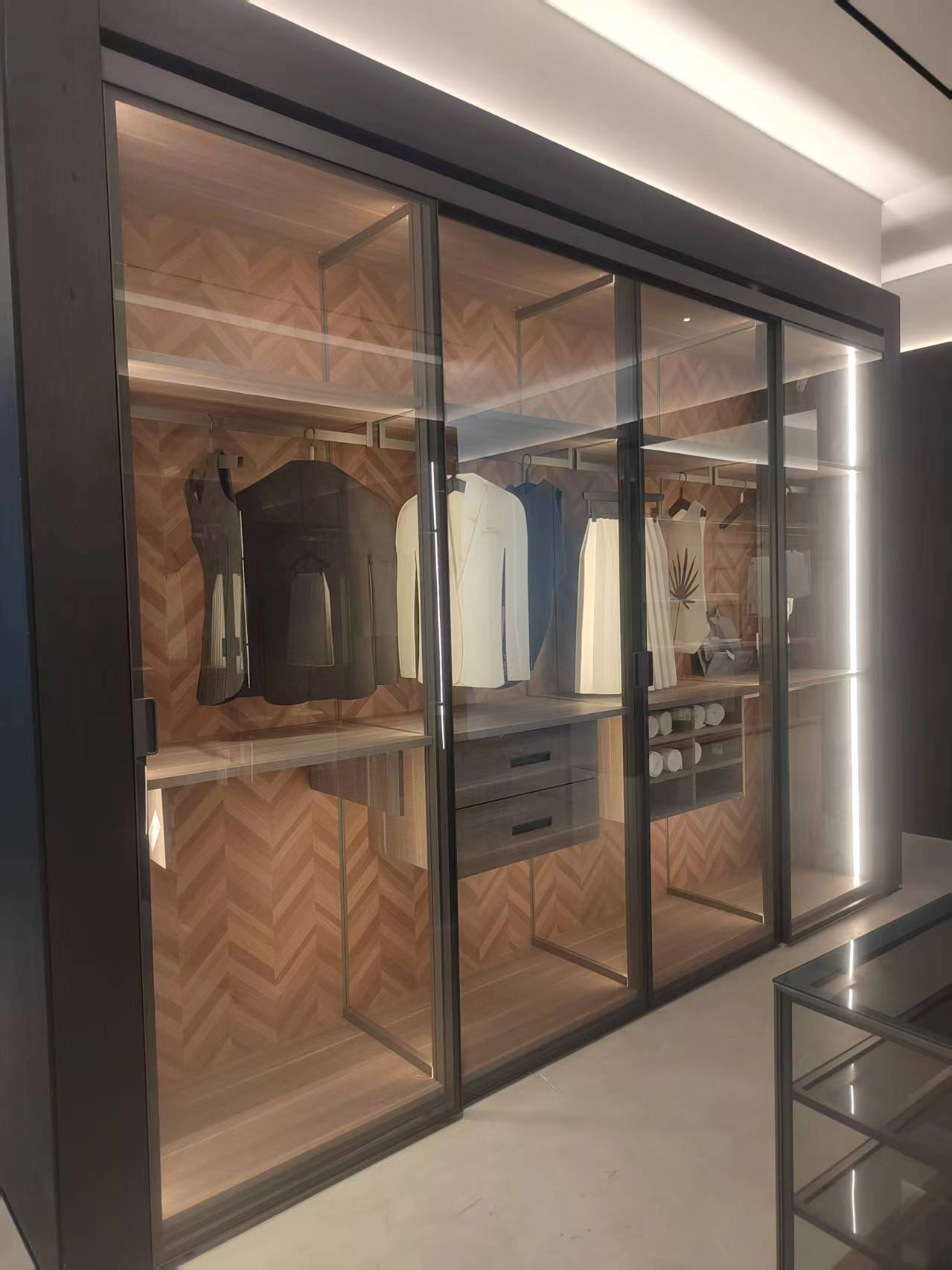
Factory Luxury Design Customized Aluminum Frame Glass Sliding Door Bedroom Wardrobe Furniture
Foshan Murano offers 20+ years of expertise in premium aluminum-frame glass sliding door wardrobes. Engineered with aircraft-grade aluminum, tempered glass, and silent-slide technology, our fully customizable solutions integrate seamless storage with modern aesthetics. Global projects exceed 1,000; contact now for free 3D design consultation.
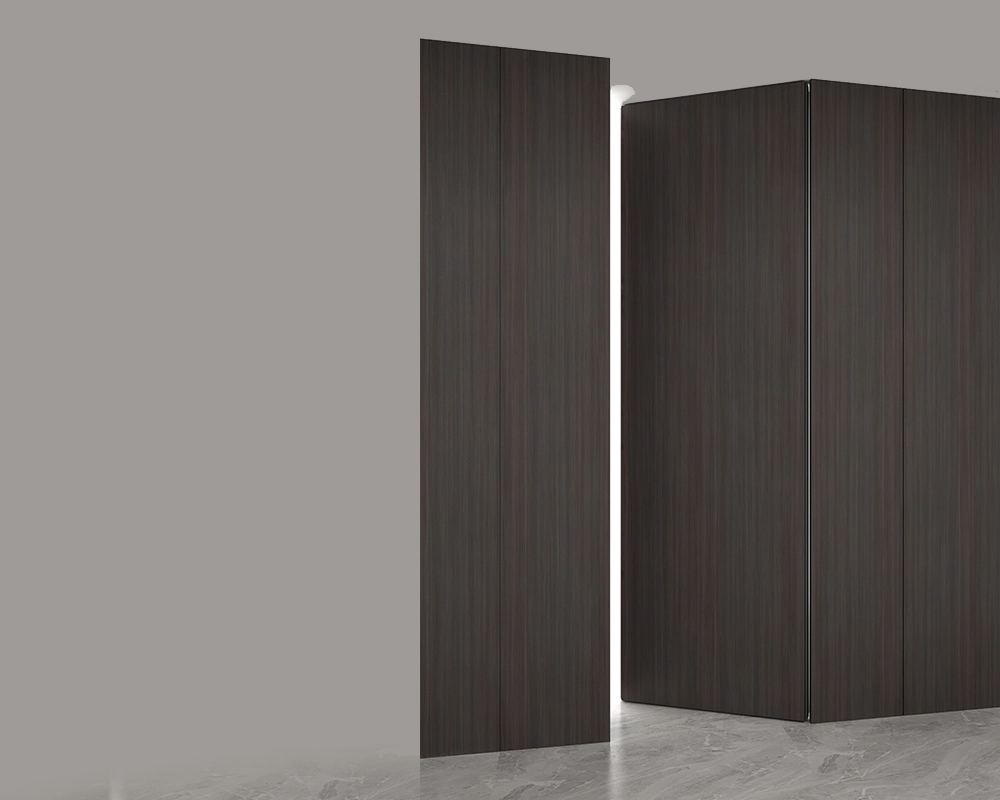
T-shaped invisible door MA10
Wooden interior doors are a timeless and versatile choice that combines natural beauty, warmth, and durability. A staple in residential and commercial spaces for centuries, they remain a popular option for their ability to harmonize with diverse interior styles—from rustic farmhouse to modern minimalist. Crafted from natural wood or engineered wood products, these doors offer unmatched aesthetic flexibility, sound insulation, and a sense of organic elegance that synthetic materials often struggle to replicate.
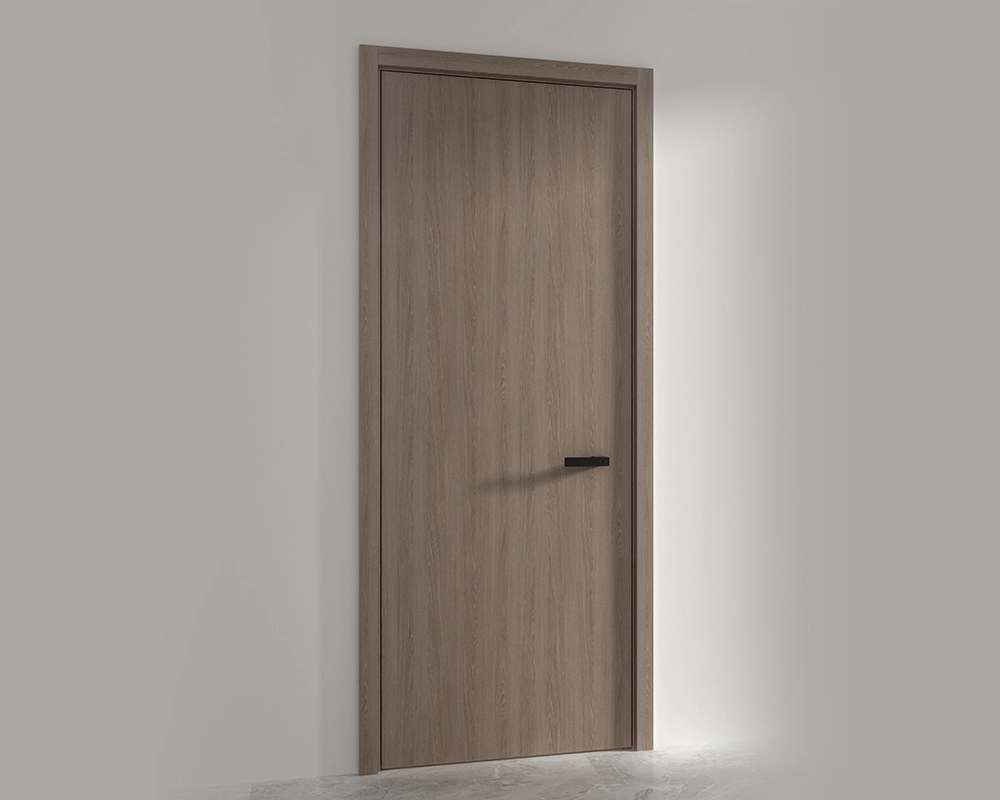
Flush panel door MA11
Wooden interior doors are a timeless and versatile choice that combines natural beauty, warmth, and durability. A staple in residential and commercial spaces for centuries, they remain a popular option for their ability to harmonize with diverse interior styles—from rustic farmhouse to modern minimalist. Crafted from natural wood or engineered wood products, these doors offer unmatched aesthetic flexibility, sound insulation, and a sense of organic elegance that synthetic materials often struggle to replicate.
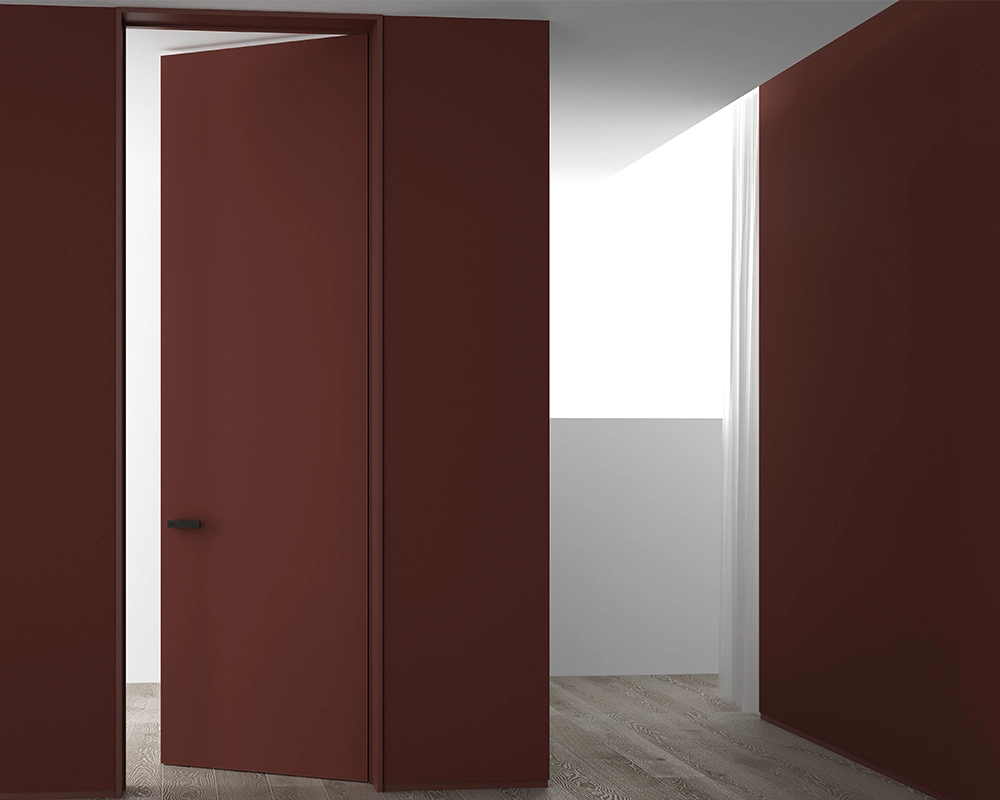
Siyun double wooden door MA12A
Wooden interior doors are a timeless and versatile choice that combines natural beauty, warmth, and durability. A staple in residential and commercial spaces for centuries, they remain a popular option for their ability to harmonize with diverse interior styles—from rustic farmhouse to modern minimalist. Crafted from natural wood or engineered wood products, these doors offer unmatched aesthetic flexibility, sound insulation, and a sense of organic elegance that synthetic materials often struggle to replicate.

 Scan QR Code
FoshanMuranoCabinet
foshanmuranocabinet
Whatsapp: +8618814138020
Scan QR Code