
How to specify custom bedroom wardrobes for bulk orders?
- 1. What exact panel specifications (thickness, grade, core type, emissions) should I lock into my purchase order to prevent mismatch claims on 100+ wardrobes?
- 2. How do I structure a Bill of Materials (BOM) and cut-list for 200 wardrobes with three size variants so production and costing are error-free?
- 3. Which quality control checkpoints and numeric tolerances should I mandate for bulk wardrobe production (CNC cutting, edge banding, hinges, drawers)?
- 4. How should I define finish and color-matching requirements (sheen, VOCs, durability) and manage the sample-approval process for large wardrobe runs?
- 5. How do I specify packaging, knock-down design and logistics to minimize shipping damage and freight cost for pallets of wardrobes?
- 6. How should I specify hardware and internal accessories (hinges, runners, organizers) so the supplier sources compatible components and maintains consistent performance across wardrobe variants?
- Concluding summary: Advantages of specifying professional custom bedroom wardrobes in detail
How to Specify Custom Bedroom Wardrobes for Bulk Orders: 6 Deep Answers
Buying custom bedroom wardrobes at scale requires factory-level detail. This guide gives six specific, pain-point-focused questions and factory-tested answers that buyers and project managers need when placing bulk orders. Many principles map directly to ordering custom kitchen cabinets — material specs, CNC nesting, sample approvals, inspection checkpoints and logistics are the common levers that control cost and quality.
1. What exact panel specifications (thickness, grade, core type, emissions) should I lock into my purchase order to prevent mismatch claims on 100+ wardrobes?
Why this matters: Vague terms like “good plywood” or “MDF” cause downstream mismatches in finish adhesion, cutting tolerances, weight and joinery. For bulk orders you must specify measurable attributes so suppliers, QC inspectors and freight handlers all reference the same data.
Concrete specification checklist (use measurable values in your PO):
- Panel type and standard: e.g., “18 mm MR-grade birch plywood, exterior-grade face, interior-grade core, 9-ply, CARB Phase 2 / TSCA Title VI compliant.” For MDF: “18 mm HDF/MDF, density 700–760 kg/m³, E1 formaldehyde emission or CARB Phase 2.”
- Face veneer or surface: “0.6 mm natural oak veneer, rotary-cut, or 0.8 mm melamine laminate (brand X, color code Y), with 45° seamless edges” — include manufacturer or brand and color code.
- Edge treatment: “ABS 2 mm or PVC 1 mm edge banding, color code, radius tolerance ±0.2 mm, hot-air welded.”
- Tolerance and flatness: “Panel thickness tolerance ±0.3 mm, flatness: max 2 mm bow per 1 m.”
- Emissions/standards: list required standards — CARB Phase 2 or TSCA Title VI (US), E1/E0 (EU), and request test reports or certificates (mill test report, FRT or VOC data).
- Moisture/finish compatibility: specify whether panels are pre-sealed for lacquer or require primer. For lacquer finishes request MDF/plywood with moisture-resistant treatment (WBP glued or A-bond for humid environments).
Why this helps: When the PO contains clear material codes, tolerance figures and emissions standards, the supplier is contractually bound to deliver verifiable, testable items — reducing tolerance disputes, reworks and rejection at the dock.
2. How do I structure a Bill of Materials (BOM) and cut-list for 200 wardrobes with three size variants so production and costing are error-free?
Why this matters: In bulk orders with multiple SKUs, a poorly structured BOM causes incorrect nesting, wasted material, and mismatched hardware deliveries. A buyer must provide factory-ready data to speed quoting and CAM preparation.
Step-by-step BOM/cut-list requirements:
- SKU hierarchy: Create parent SKU for the model and child SKUs per size/finish variant (e.g., WARD-ALPHA-PARENT; WARD-ALPHA-600; WARD-ALPHA-800; WARD-ALPHA-1000).
- Flat cut-list CSV: Columns include SKU, part name, quantity per unit, length, width, thickness, material code, grain direction, nesting priority, and edge-band code. Provide one line per cut part.
- Hardware BOM: List each hardware item with supplier/brand, part number, quantity per wardrobe and per full order (e.g., Blum CLIP top hinge + soft-close, item X; Blum undermount drawer runner, length Y).
- Assembly BOM: Identify sub-assemblies (door assembly, drawer pack, internal organizer pack) to match packing lists and labeling for KD shipments.
- Nest-ready files: Provide DXF or CNC nesting files where possible; if you cannot supply them, require supplier to return nesting sheets and material utilization reports as part of the quotation.
- Revision control: Assign version numbers and require supplier sign-off for any change. Provide a master parts list with unique IDs (e.g., MAT-PLY-18MM-BIRCH-01, EDGE-ABS-2MM-WHITE-01).
How to reduce SKU complexity: Group wardrobes into families (same carcass, different door faces) so the cut-list and nesting are more efficient and hardware bundles are consistent. This reduces MOQ pressure on hardware and provides better per-unit pricing.
3. Which quality control checkpoints and numeric tolerances should I mandate for bulk wardrobe production (CNC cutting, edge banding, hinges, drawers)?
Why this matters: Without numeric tolerances the factory and buyer interpret quality differently. A QC plan with checkpoints reduces defects, protects schedule, and simplifies acceptance sampling.
Recommended QC plan & tolerances (industry-proven):
- Incoming material inspection: Verify panel thickness, moisture content (recommend 6–10% for indoor furniture), face quality, and certificate compliance. Sample size: statistically significant batch samples, or define Acceptance Quality Limit (AQL) e.g., AQL 2.5.
- CNC cutting tolerance: ±0.5 mm for part dimensions; squareness within ±0.5 mm per 1 m. Verify with first-article sample (FAS).
- Edge-banding: Edge alignment tolerance ±0.3–0.5 mm; adhesion pull test where applicable. No bubbling, no edge overhang >0.5 mm.
- Hinge and runner alignment: Door gap tolerance 1–2 mm consistent vertical/horizontal; hinge screw torque test; drawer side clearance ±1–2 mm; full-extension runners tested for 50,000 cycles or supplier spec.
- Finish inspection: No runs, orange peel, or dust inclusions visible at 1 m under 500 lux. For lacquer, specify pencil hardness (e.g., HB–2H) or Taber abrasion cycles if needed.
- Functional test: Doors and drawers operate smoothly; soft-close engages within manufacturer spec; load test for hanging rods and shelf loads (e.g., 30–50 kg per shelf depending on design).
- Final inspection & sampling: Use AQL sampling tables or 100% inspection for visible surfaces. Include pre-shipment inspection by an independent third party (SGS, Intertek) for orders of significant value.
Document these checkpoints in the PO and require sign-off on First Article Inspection (FAI) and pre-shipment reports. This mirrors practices in custom kitchen cabinet procurement and prevents disputes at the receiving end.
4. How should I define finish and color-matching requirements (sheen, VOCs, durability) and manage the sample-approval process for large wardrobe runs?
Why this matters: Finish variability is one of the most common reasons for rejection. Bulk orders magnify small color or sheen differences, and finishing methods interact with substrates differently.
Sample and finish approval best practices:
- Define finish system in the PO: e.g., “PU lacquer, 3 coats + 1 clear coat, satin sheen 20–25 GU, VOC < 0.5 g/L post-cure.” If using laminate/melamine, specify brand, code and surface texture (matte/silk/oak grain).
- Send physical reference standards: Provide a physical color card or an approved sample (A6–A4 size) per finish. Digital color codes (RAL, Pantone) are useful but must be backed by physical samples.
- Create a sample approval sequence: prototype sample (PPS) → production sample (first production run) → batch sample (per 50–100 units). Each step must have a sign-off form with checklist items for adhesion, color, sheen, and cure time.
- Test protocols: request adhesion cross-cut test, Taber abrasion cycles or equivalent, humidity cycling if wardrobes shipped to coastal climates, and formaldehyde/VOC emission tests where required by buyer regulations.
- Specify acceptable variation: e.g., “ΔE ≤ 1.5 for color difference across same batch; sheen variance ≤ 3 GU.” Use spectrophotometer readings for objective color control when feasible.
Why objective measures matter: For large runs, human visual matching is inconsistent. Use instruments (spectrophotometer for color, glossmeter for sheen) and require supplier reporting. This reduces rework for both bedroom wardrobes and kitchen cabinet doors, where finish continuity is essential.
5. How do I specify packaging, knock-down design and logistics to minimize shipping damage and freight cost for pallets of wardrobes?
Why this matters: Poor packaging leads to door/edge damage and high replacement cost at destination. Strategic knock-down (KD) design saves freight and avoids oversized LCL/FCL complications.
Packaging & logistics checklist:
- KD vs assembled: Specify whether wardrobes ship fully assembled or flat-packed. Flat-pack (KD) usually reduces freight cost and risk. If assembled, demand crate or custom plywood cases per unit.
- Packing lists & labeling: Each carton labeled with SKU, unit count, side-up arrows, and a fragile icon. Include assembly drawings and hardware pack inside each wardrobe kit.
- Protective packaging: Use edge protectors, foam corner guards, and stretch film. For visible door faces, add a sacrificial film and replaceable MDF top shield to prevent abrasion.
- Palletization rules: Max stack height, pallet type (EUR, CHEP, or wooden export pallet with ISPM15), shrink-wrap patterns, and weight per pallet. Provide load plans for container stuffing (FCL) to optimize cube utilization.
- Shipping damage metrics: Require supplier to provide photos of packed pallets, and run a pre-shipment loading video if possible. For high-value orders, use container sealing and third-party inspection at factory prior to loading.
- Logistics clauses in PO: Define liability for transit damage, transit insurance requirements (CIF vs FOB), and who handles customs documentation. This avoids finger-pointing between buyer and factory.
Tip: A KD-friendly design (use common carcass panels, reversible side panels, and standardized hardware pack) reduces packing complexity and can increase container utilization by simplifying internal packaging and stackability.
6. How should I specify hardware and internal accessories (hinges, runners, organizers) so the supplier sources compatible components and maintains consistent performance across wardrobe variants?
Why this matters: Hardware differences (length, load rating, brand) cause inconsistent feel and lead to warranty claims. A clear hardware spec ensures interchangeability and predictable performance.
Hardware specification guide:
- List brand, model and technical specs: e.g., “Hinges: Blum CLIP top-blind hinge, soft-close, 110° opening, 35 mm cup, corrosion-resistant finish; Drawer runners: Blum TANDEM full-extension, 45 kg load rating, length XXX mm.”
- Provide mounting details: mounting plate height, screw type, pre-drilled pilot sizes and hole locations to ensure consistent drilling templates between SKUs.
- Accessories specification: hanging rails (diameter and finish), adjustable shelf pins, internal organizers with SKU, and load-bearing specs for clothes rails and shelves. If supplying LED lighting, specify driver, IP rating and wiring harness lengths.
- Spare parts and kits: For large orders, require the supplier to pack spare hardware kits (hinges, screws, connectors) — commonly 1–2% of total quantity or a fixed number per shipment — and include a parts list for after-sales support.
- Testing requirements: Salt spray test for plated hardware if used in coastal regions, dynamic cycle test counts for runners and hinges based on intended lifecycle (e.g., 50k cycles for heavy-duty use).
Why brand specificity matters: Naming reliable manufacturers (Blum, Hettich, Grass) when you need exact fit and lifetime performance removes ambiguity. If you accept equivalent hardware, define clear acceptance criteria (load rating, finish, cycle tests) and require samples for approval.
Concluding summary: Advantages of specifying professional custom bedroom wardrobes in detail
When you specify panel grades, emission standards, BOMs, numeric QC tolerances, objective finish controls, packing rules and exact hardware codes, you convert subjective expectations into verifiable contract deliverables. The advantages: fewer rejects, predictable lead times, lower overall cost through material nesting and SKU rationalization, simplified logistics, and consistent end-user experience — the same benefits buyers expect from well-specified custom kitchen cabinets.
For complex or large-volume projects we recommend: create a single master specification document, require first-article approval, include third-party pre-shipment inspection, and adopt a version-controlled BOM/CAD workflow to reduce rework and expedite delivery.
If you want a factory-validated quotation, sample management or a pre-shipment inspection plan for your custom bedroom wardrobes or custom kitchen cabinets, contact us for a quote: www.muranocabinet.com or [email protected].
How to Make Traditional Kitchen Cabinets Look Modern
Wholesale Custom Furniture Lines: Precision Manufacturing for Every Space
How to Streamline B2B Custom Furniture Procurement: A Step-by-Step Industry Guide
Green Kitchen Cabinets vs. Blue: Why Green is the New Neutral for Modern Homes in 2026
FAQ
What's MOQ for our kitchen cabinets, wardrobe cabinets or bathroom cabinets?
1 set.
Can we ship the furniture cabinets to customer's port or city?
Yes. Please provide the city name or port name when you send us an inquiry.
What information are needed for getting a quote for our furniture cabinets?
Your size infomation or room drawings.
What's lead time for furniture cabinets?
It's about 20 - 30 days.
Can we produce products according to customer's room size?
Yes. All our cabinets are custom size.
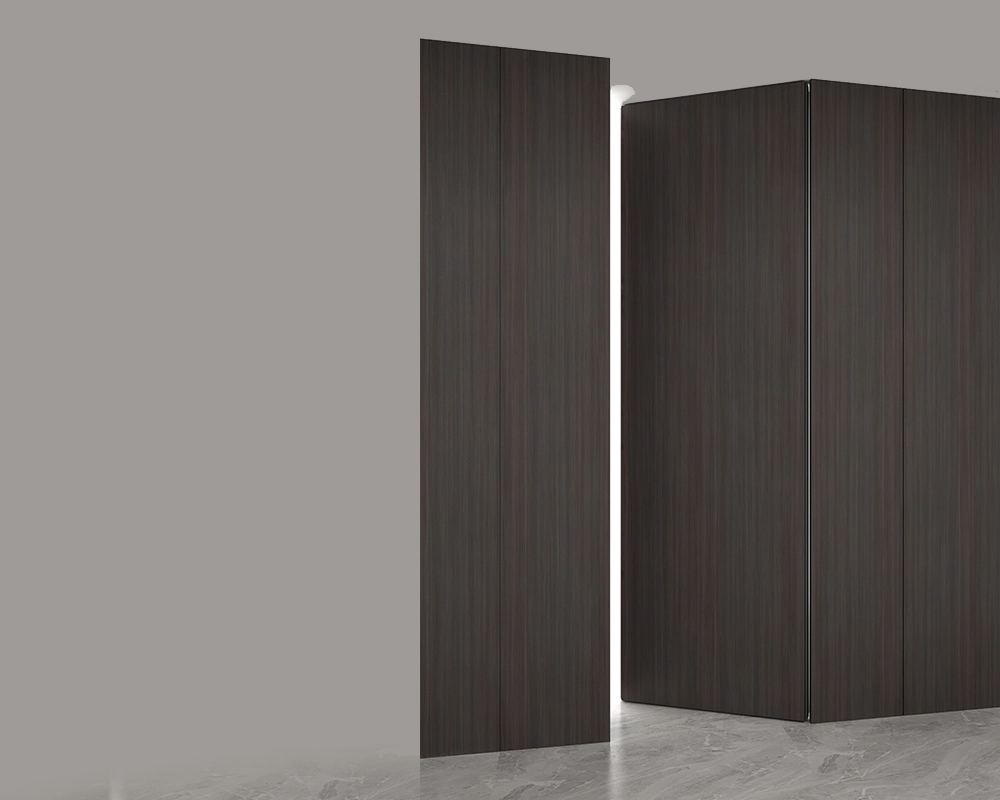
T-shaped invisible door MA10
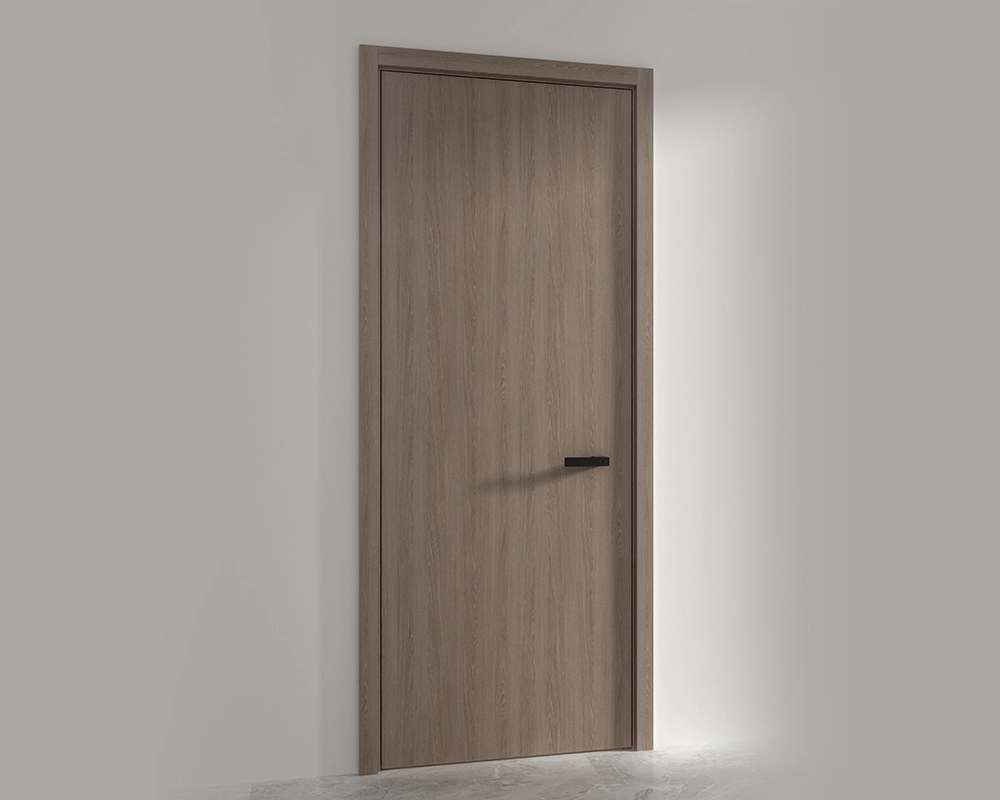
Flush panel door MA11
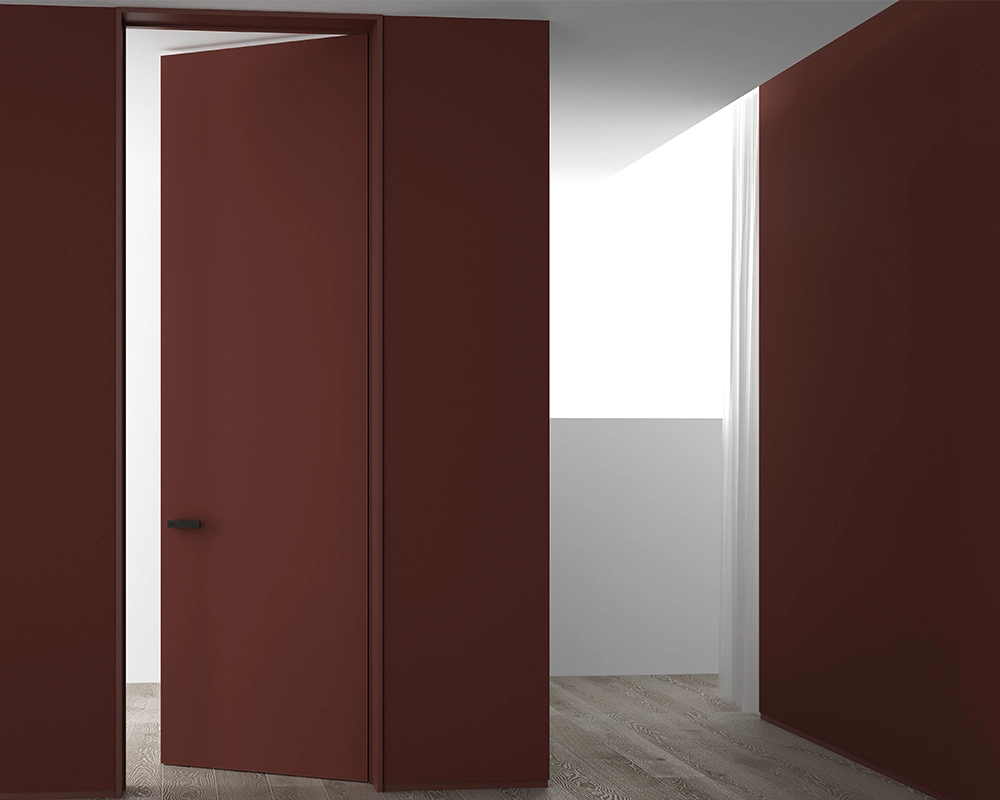
Siyun double wooden door MA12A
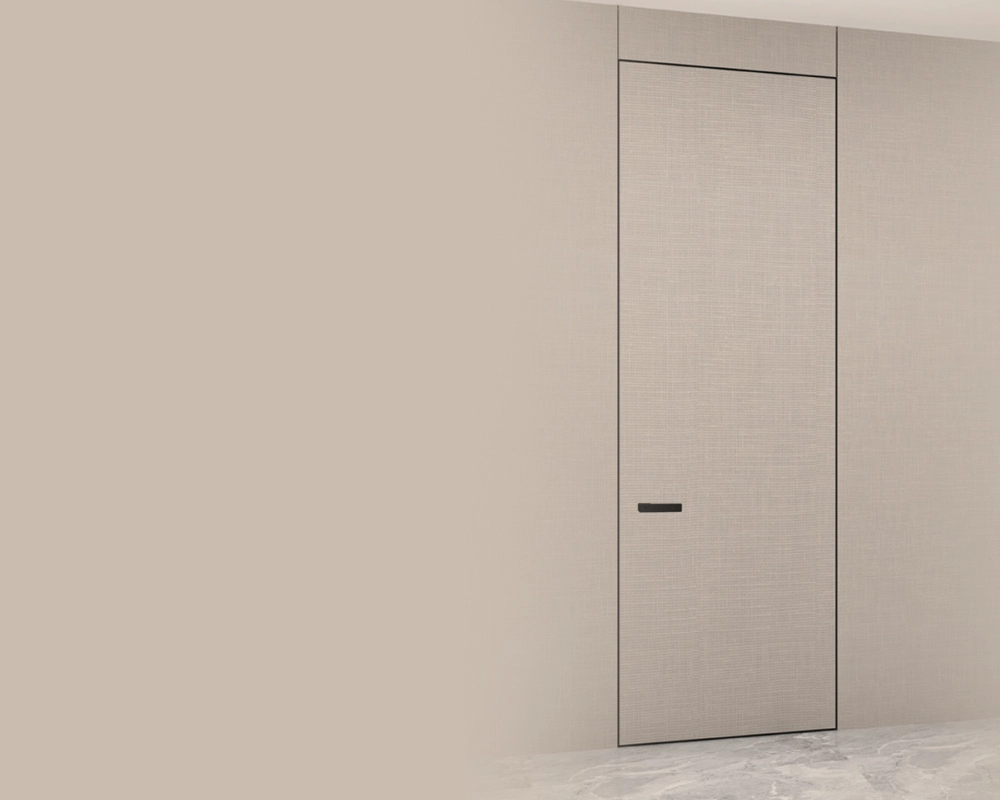
External flush right inward opening door MA13
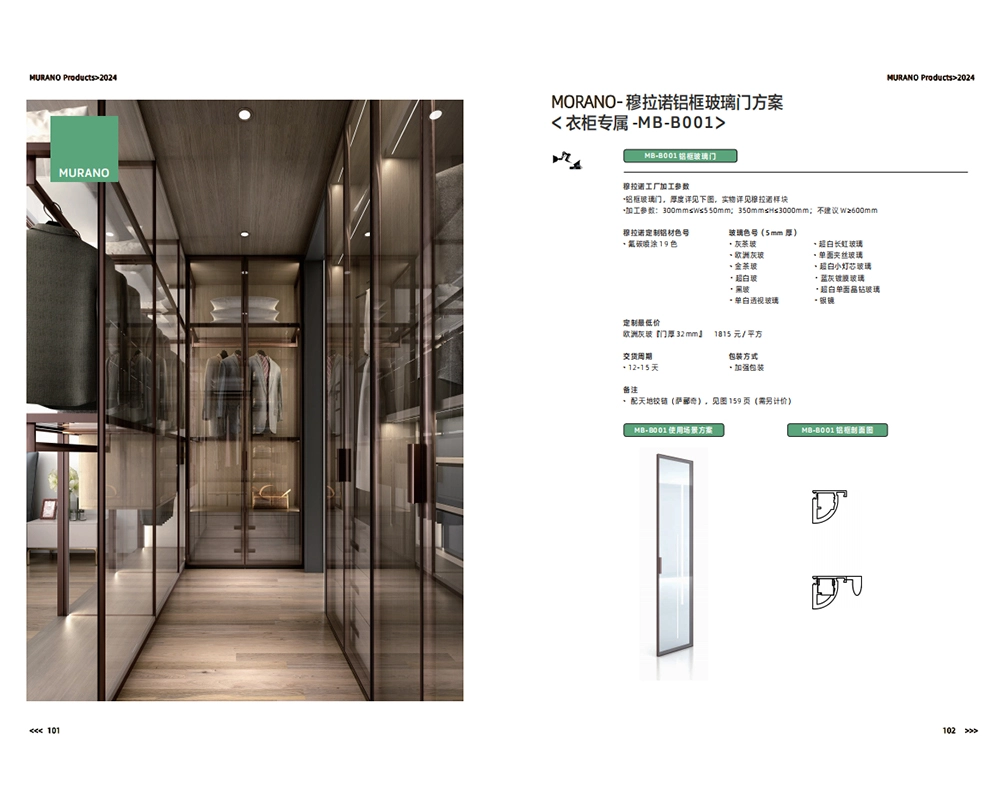
Aluminum Frame Glass Hinged Door - MBB001
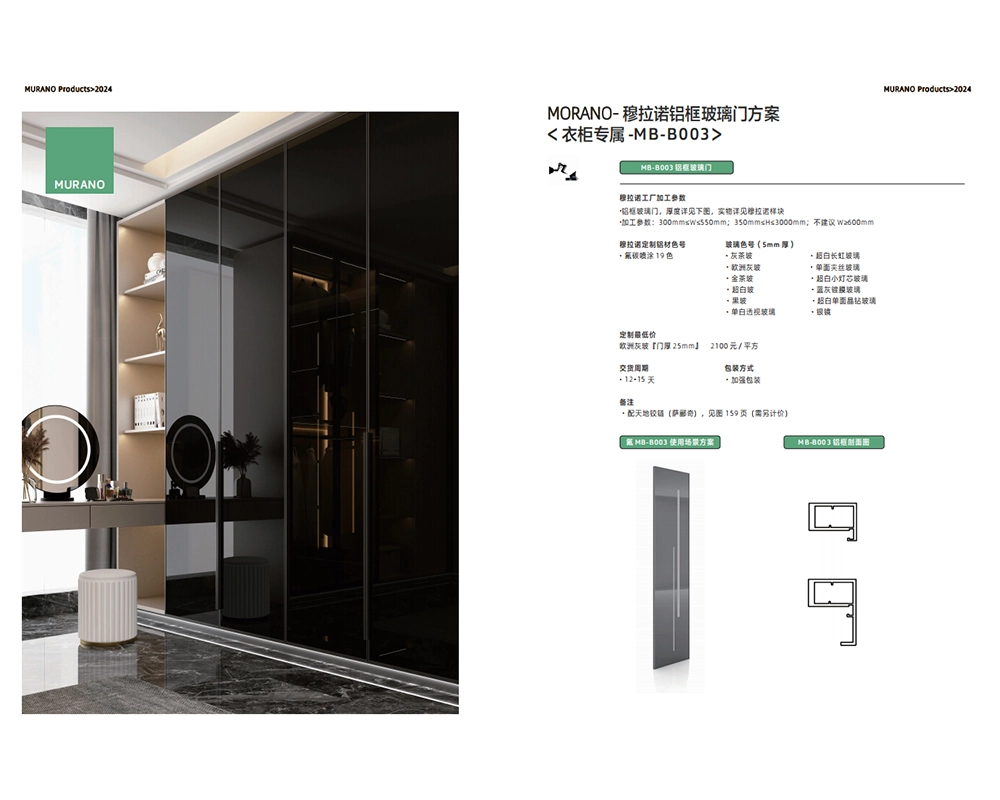
Aluminum Frame Glass Hinged Door - MBB003
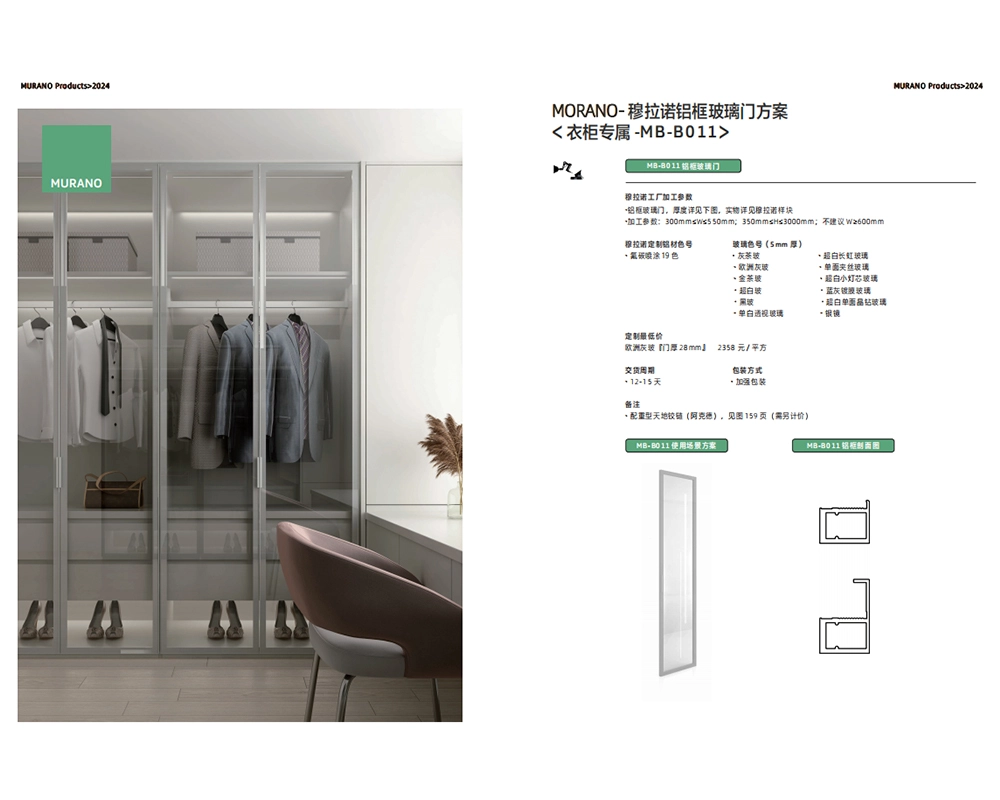
Aluminum Frame Glass Hinged Door - MBB011
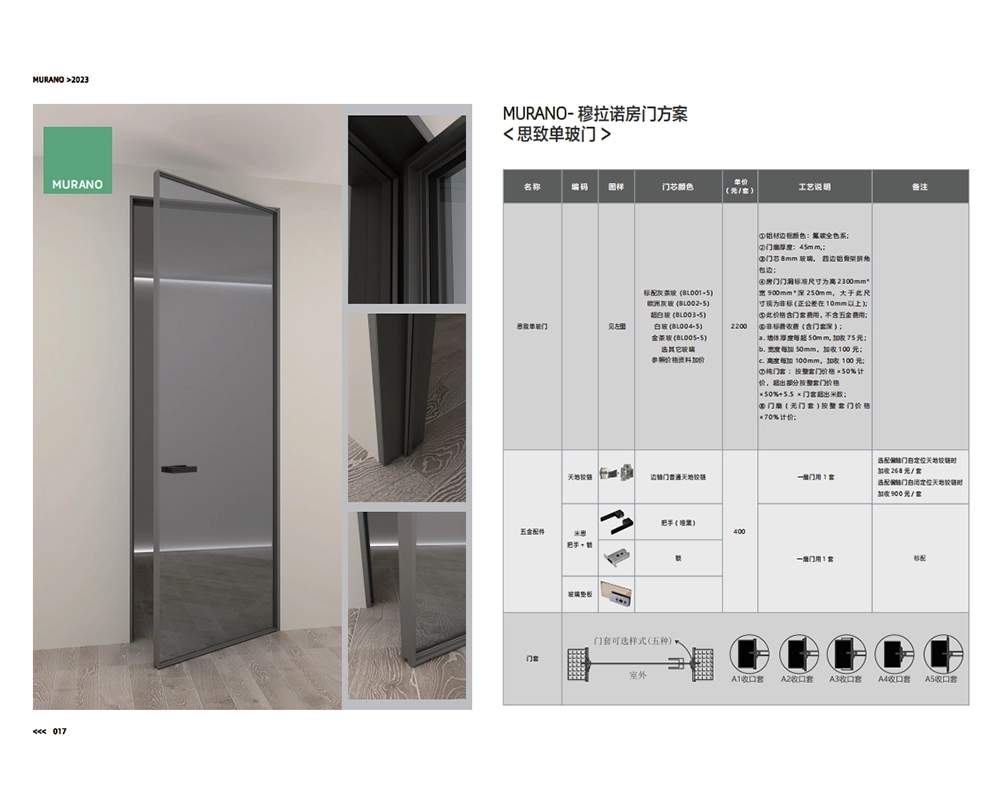
SZ Single side glass interior door
Request a Free Consultation And Price Estimate
Get in touch with Murano today for a personalized consultation, and let us bring your vision to life. Fill out the form below or contact Murano directly to start your journey toward a beautifully tailored home!"

 Scan QR Code
FoshanMuranoCabinet
foshanmuranocabinet
Whatsapp: +8618814138020
Scan QR Code