
Custom Made Kitchen Cabinets vs. High-End Semi-Custom: The Definitive Quality & Durability Showdown (2026 Guide)
- Key Takeaways: The 30-Second Summary
- What is the difference between custom made kitchen cabinets and semi-custom?
- Round 1: Construction & Joinery – The Durability Test
- Round 2: The Fit & Finish – Aesthetics and Precision
- Expert Tips: Common Mistakes When Choosing Cabinetry Grades
- Industry Case Study: Solving the 'Unsolvable' Layout
- The Verdict: Cost vs. Long-Term Value (ROI)
- FAQ: Your Technical Questions Answered
- Are custom made kitchen cabinets worth the extra cost?
- What is the most durable finish for custom cabinets?
- How do I measure for custom kitchen cabinets?
- Does frameless construction last as long as framed?
- Conclusion
In the world of luxury renovations, the line between "high-end semi-custom" and true Custom made kitchen cabinets is often blurred by clever marketing. However, for the homeowner demanding precision, longevity, and architectural integrity, the differences are structural, not just semantic. This guide dissects the manufacturing DNA of both options to help you decide where to invest your renovation budget.
Key Takeaways: The 30-Second Summary
True custom cabinets offer 100% spatial efficiency and superior joinery, whereas semi-custom is limited by 3-inch sizing increments.
If you are skimming, here is why true custom usually wins the long game:
- Precision: Custom builds utilize every millimeter of space; semi-custom requires "filler strips" to close gaps.
- Durability: Bespoke cabinetry joinery (dovetail/mortise) outlasts the dowel-and-glue construction common in semi-custom lines.
- ROI: High-quality custom work creates a "furniture asset" that holds value, unlike semi-custom work, which depreciates like standard fixtures.
- Finish: Catalyzed conversion varnish used in custom shops is chemically superior to standard factory lacquer.
What is the difference between custom made kitchen cabinets and semi-custom?
Custom made kitchen cabinets are built to exact specifications with no size limitations, allowing for a precise fit down to 1/16th of an inch.
While high-end semi-custom cabinets are modifying stock boxes from a catalog (usually in 3-inch width increments), true custom is a "design-build" process. There is no catalog. Every box, drawer, and door is manufactured specifically for your floor plan.
- The "Filler" Factor: Semi-custom requires filler strips (strips of wood painted to match) to cover dead space when the 3-inch increments don't perfectly fit a wall. Custom cabinets have Custom cabinet dimensions that fit the wall exactly.
- Material Freedom: Semi-custom limits you to their offered woods and stains. Customization allows for exotic veneers, color-matching to existing furniture, and unique integrated hardware.
- Vertical Grain Matching: A hallmark of luxury custom work is "grain sequencing," where the wood grain flows continuously from one drawer front to the next. This is impossible in mass-production semi-custom lines.
Round 1: Construction & Joinery – The Durability Test
Durability is determined by the quality of the joinery and the thickness of the structural box materials, not just the door style.
When you open a cabinet 20 years from now, will it sag? That answer lies in the "bones" of the unit. High-end semi-custom often uses 1/2-inch particleboard sides with glued dowels. While sufficient for standard use, it lacks the rigidity of Bespoke cabinetry joinery found in true custom work.
- Box Construction: Custom cabinets typically use 3/4-inch furniture-grade plywood for the box. This prevents "racking" (twisting) over time, especially when supporting heavy stone countertops.
- Drawer Joints: Look for dovetail joints on all four corners of the drawer box. According to the Architectural Woodwork Institute, premium-grade joinery standards require robust construction methods that economy or standard semi-custom grades often bypass.
- Hardware integration: Custom makers often utilize heavy-duty runners (like Blum Legrabox) rated for 100+ lbs, whereas semi-custom lines may use standard slides that wear out under the weight of heavy pots and pans.
Round 2: The Fit & Finish – Aesthetics and Precision
The chemical composition of the finish determines whether your cabinets will resist water damage, oils, and chipping over the next decade.
This is the most critical technical difference: Conversion varnish vs. lacquer. Most semi-custom factories use standard lacquer because it dries quickly, allowing for faster production lines. Custom shops, however, prioritize longevity.
- Conversion Varnish (The Winner): A post-catalyzed acid-cured finish. It is chemically cross-linked, making it impervious to acetone, alcohol, and water. It is thicker and more elastic, meaning it moves with the wood rather than cracking.
- Standard Lacquer (The Loser): Brittle and susceptible to moisture rings and yellowing over time.
- Frameless vs framed durability: This is often debated. Framed cabinets (American style) rely on the face frame for rigidity. Frameless (European style) rely on a thicker box (3/4-inch). In a custom build, both are incredibly durable. However, frameless offers 10-15% more usable drawer storage, a key factor in modern Kitchen remodel ROI optimization.
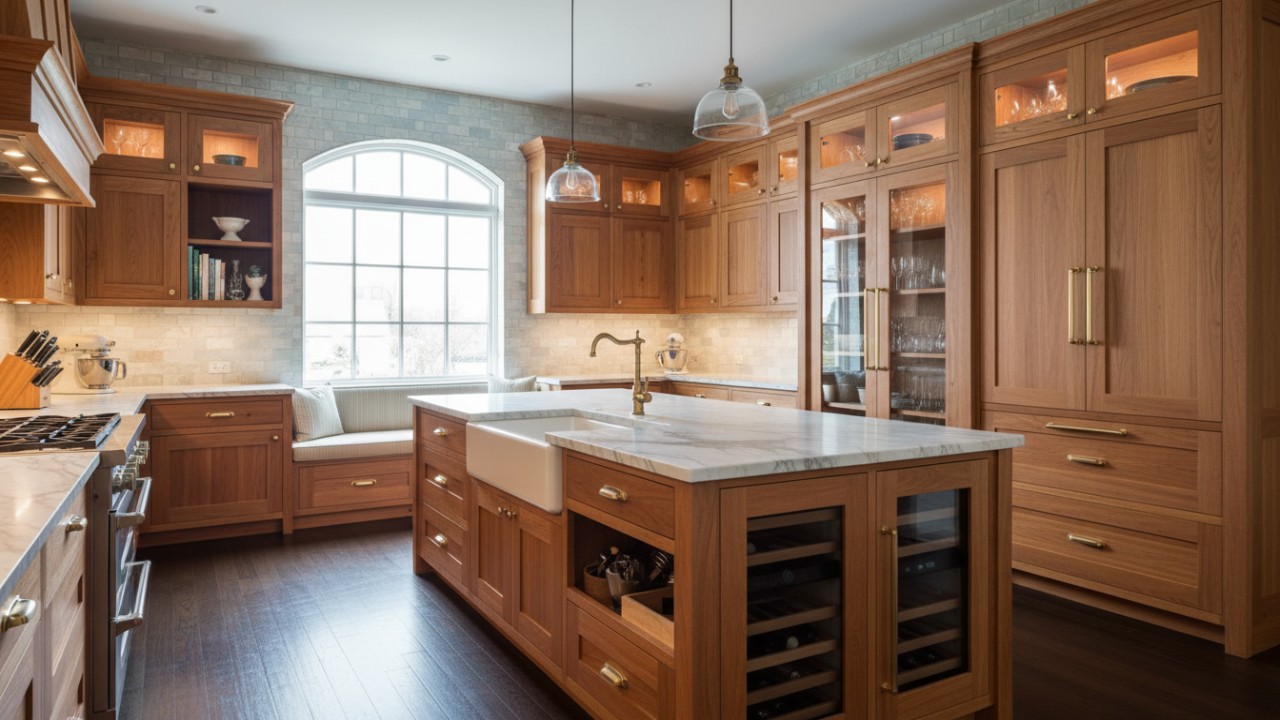
Expert Tips: Common Mistakes When Choosing Cabinetry Grades
Do not assume that a higher price tag on a brand-name semi-custom line equals superior construction quality.
Many homeowners overpay for a "luxury" semi-custom brand name when they could have commissioned a local or specialized custom manufacturer for a similar price.
- Mistake #1: Ignoring the Back Panel. Check the thickness of the back panel. If it is a flimsy 1/4-inch hanging rail, your cabinets may pull away from the wall under load. Custom cabinets should feature solid backing.
- Mistake #2: Overlooking Appliance Tolerances. High-end appliances (Sub-Zero and Wolf) often require "flush inset" installation. Semi-custom sizes rarely accommodate these tight tolerances perfectly, leaving awkward gaps.
- Mistake #3: Settling for Standard Corners. Blind corner cabinets in semi-custom lines are notorious for wasted space. Custom designs can utilize angled boxes or specialized pull-outs that reclaim that dead zone.
Industry Case Study: Solving the 'Unsolvable' Layout
Experience matters when dealing with non-standard architecture.
Consider a recent project involving a kitchen with structural pillars and a non-90-degree wall angle. Standard semi-custom cabinetry would have required massive filler strips, wasting nearly 12 inches of storage space.
This is where manufacturers like MURANO excel. With over 20 years of expertise and projects completed in over 50 countries, Foshan Murano Smart Home Co., Ltd. approaches these challenges not by trying to fit a box into a hole, but by building the box for the hole. By utilizing advanced production technology to cut angled backs and scribed sides, a custom solution can recover 20% more usable storage compared to a stock alternative. This level of "Problem-Solution" engineering is the defining trait of true custom manufacturing.
The Verdict: Cost vs. Long-Term Value (ROI)
While custom cabinetry carries a higher upfront cost, the long-term ROI is superior due to extended lifecycle and resale appeal.
Real estate data consistently suggests that kitchens sell homes. According to the 2025 Cost vs. Value Report by Remodeling Magazine, minor kitchen remodels (focusing on high-impact updates) can recoup a massive percentage of their cost—often exceeding 90% in hot markets.
- The 20-Year Horizon: A semi-custom kitchen with standard lacquer may need refinishing or facing after 10-12 years. A custom kitchen with conversion varnish and 3/4-inch plywood boxes can last 25+ years.
- Resale Perception: Listing "Custom Bespoke Cabinetry" in a sales brochure signals to buyers that the home is a luxury asset, distinguishing it from flips using "builder-grade" materials.
- Investment Strategy: If this is your "forever home," the cost per year of custom is actually lower than semi-custom when amortized over two decades.
FAQ: Your Technical Questions Answered
Are custom made kitchen cabinets worth the extra cost?
Yes, specifically for irregular layouts or homes where maximizing every inch of storage adds significant value. The durability of custom joinery often means it lasts 20+ years longer than lower-grade alternatives, making the lifecycle cost lower.
What is the most durable finish for custom cabinets?
Conversion varnish vs. lacquer is the key comparison here. Conversion varnish is widely considered the gold standard for durability, offering superior resistance to moisture, household chemicals, and physical chipping compared to standard pre-catalyzed lacquer.
How do I measure for custom kitchen cabinets?
Precise laser measuring by a professional is recommended. Custom cabinets are built to strict Custom cabinet dimensions (often 1/16th inch tolerances). Because walls are rarely perfectly plumb, professional templating ensures the cabinets are scribed to fit your specific walls.
Does frameless construction last as long as framed?
When discussing Frameless vs framed durability, both are excellent if built correctly. Frameless (Euro-style) requires thicker box construction (3/4-inch) to maintain rigidity without the face frame. If the manufacturer uses thin particle board for frameless cabinets, they will fail. Always ensure your frameless cabinets use furniture-grade plywood or high-density engineered cores.
Conclusion
Choosing between custom and semi-custom comes down to your specific layout challenges and your desire for longevity. If you demand millimeter-perfect precision, unlimited finish options, and furniture-grade durability that withstands decades of daily use, true customization is the clear winner. Don't settle for filler strips or wasted space in your dream kitchen.
Contact Foshan Murano Smart Home Co., Ltd. today to discuss your specific needs.
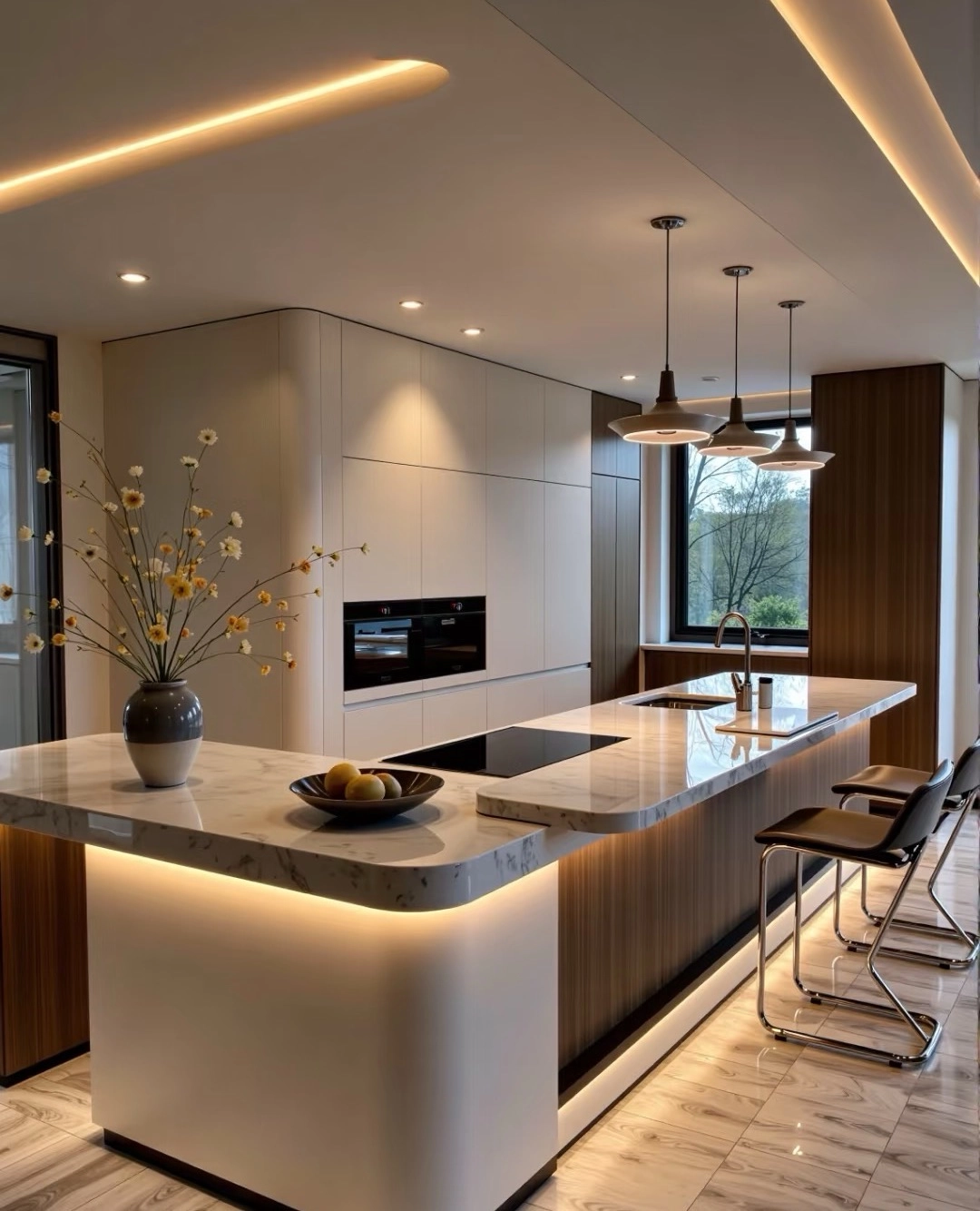
How to Make Traditional Kitchen Cabinets Look Modern
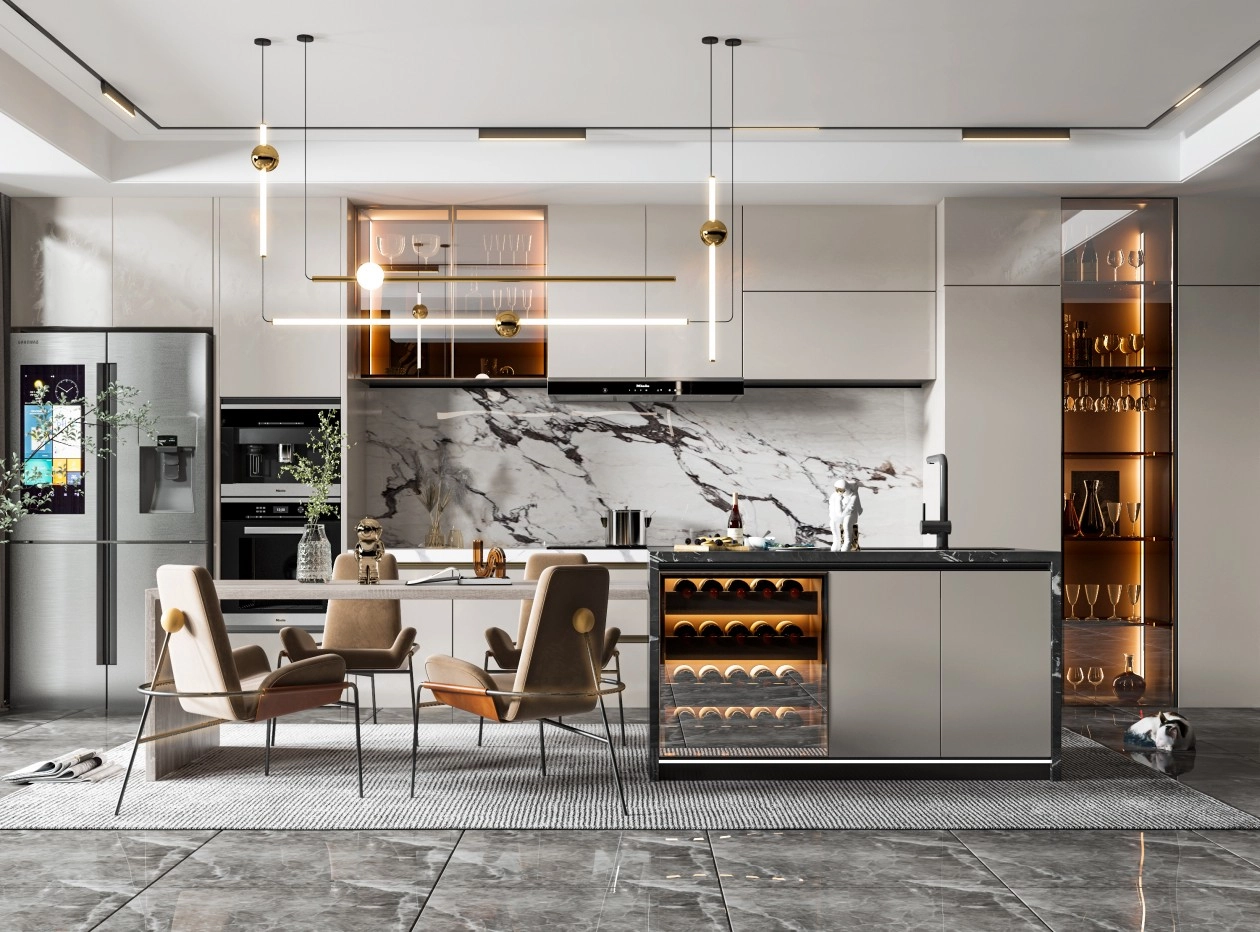
Wholesale Custom Furniture Lines: Precision Manufacturing for Every Space
How to Streamline B2B Custom Furniture Procurement: A Step-by-Step Industry Guide
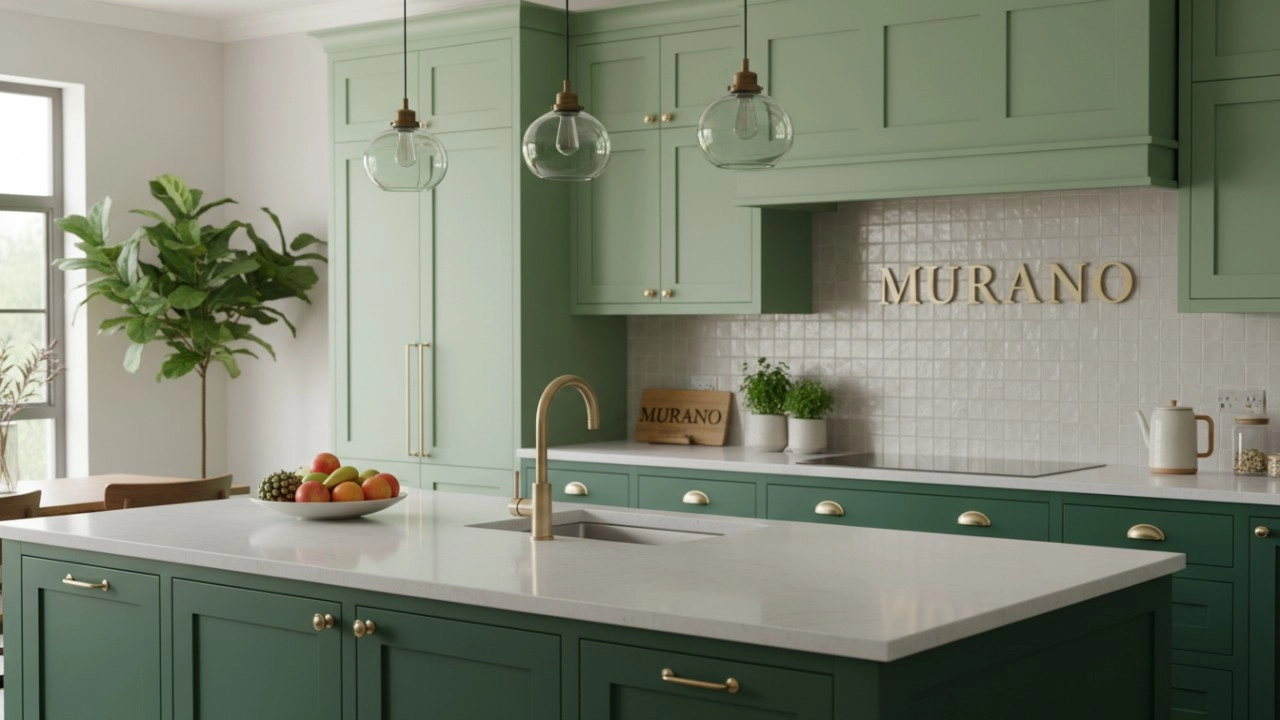
Green Kitchen Cabinets vs. Blue: Why Green is the New Neutral for Modern Homes in 2026
FAQ
What's MOQ for our kitchen cabinets, wardrobe cabinets or bathroom cabinets?
1 set.
What information are needed for getting a quote for our furniture cabinets?
Your size infomation or room drawings.
Can we produce products according to customer's room size?
Yes. All our cabinets are custom size.
Can we ship the furniture cabinets to customer's port or city?
Yes. Please provide the city name or port name when you send us an inquiry.
What's the payment terms of all our products?
T/T (30% inadvance, the balance shall be paid off before delivery), Western Union or L/C.
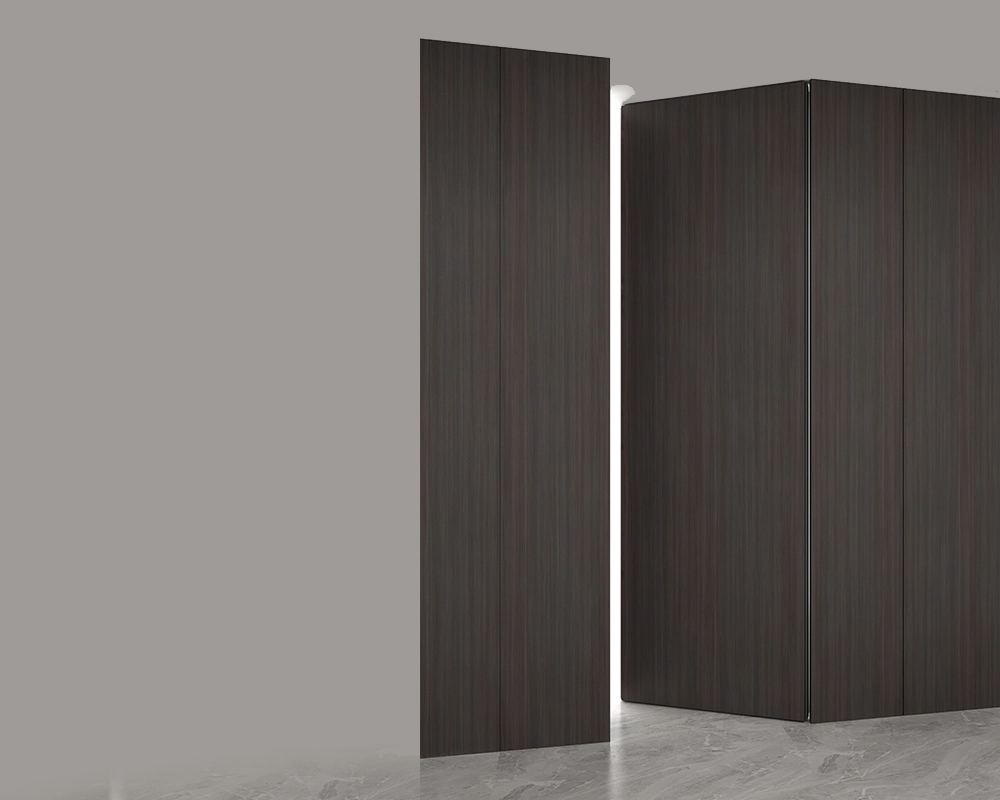
T-shaped invisible door MA10
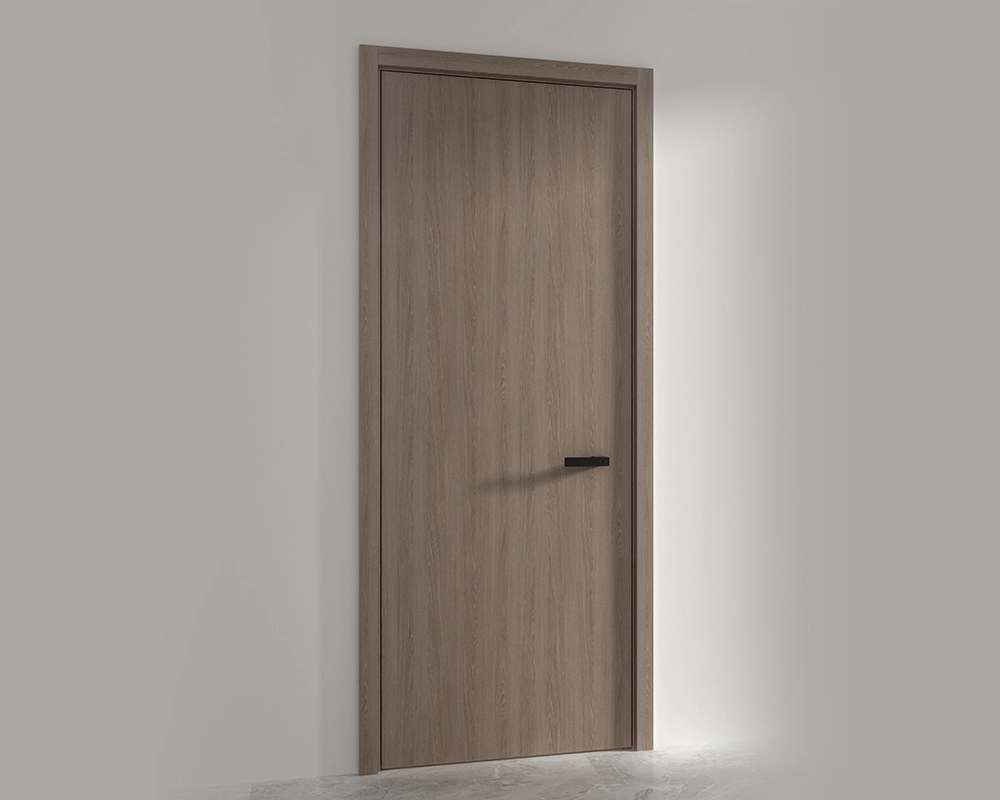
Flush panel door MA11
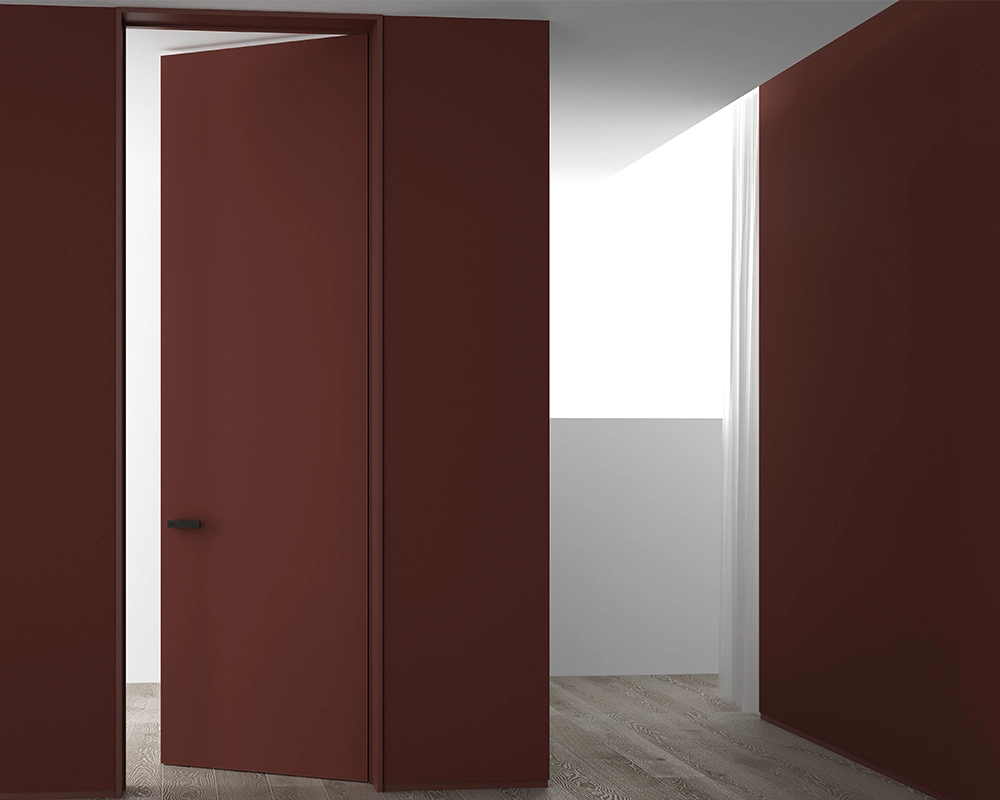
Siyun double wooden door MA12A
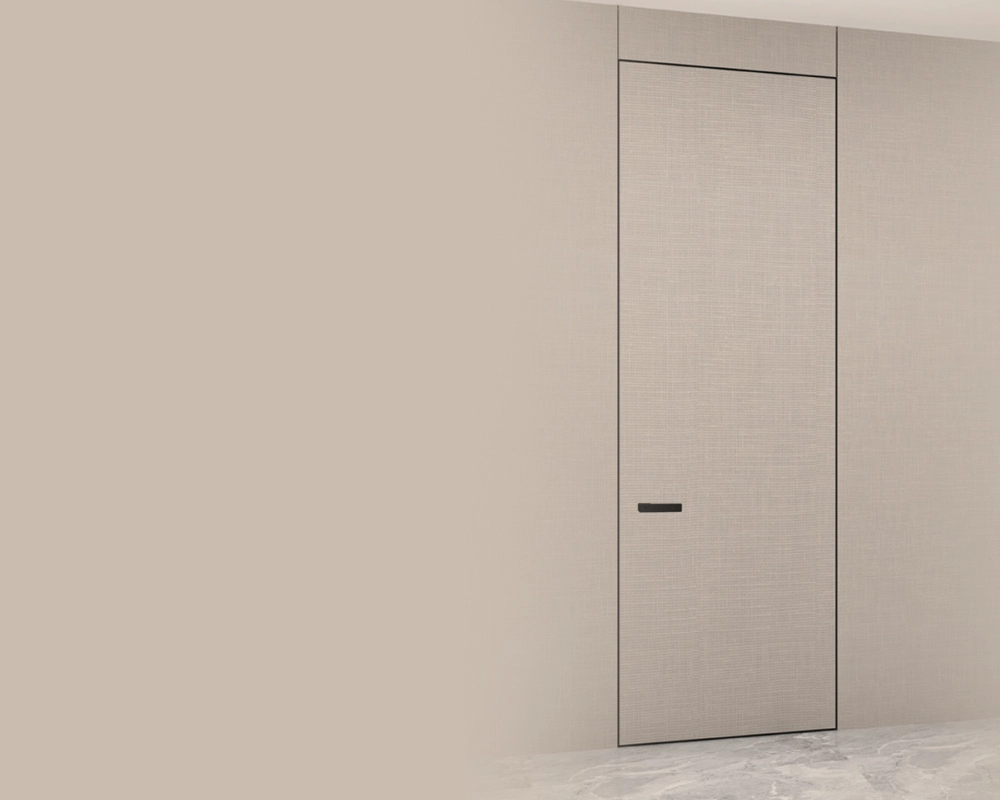
External flush right inward opening door MA13
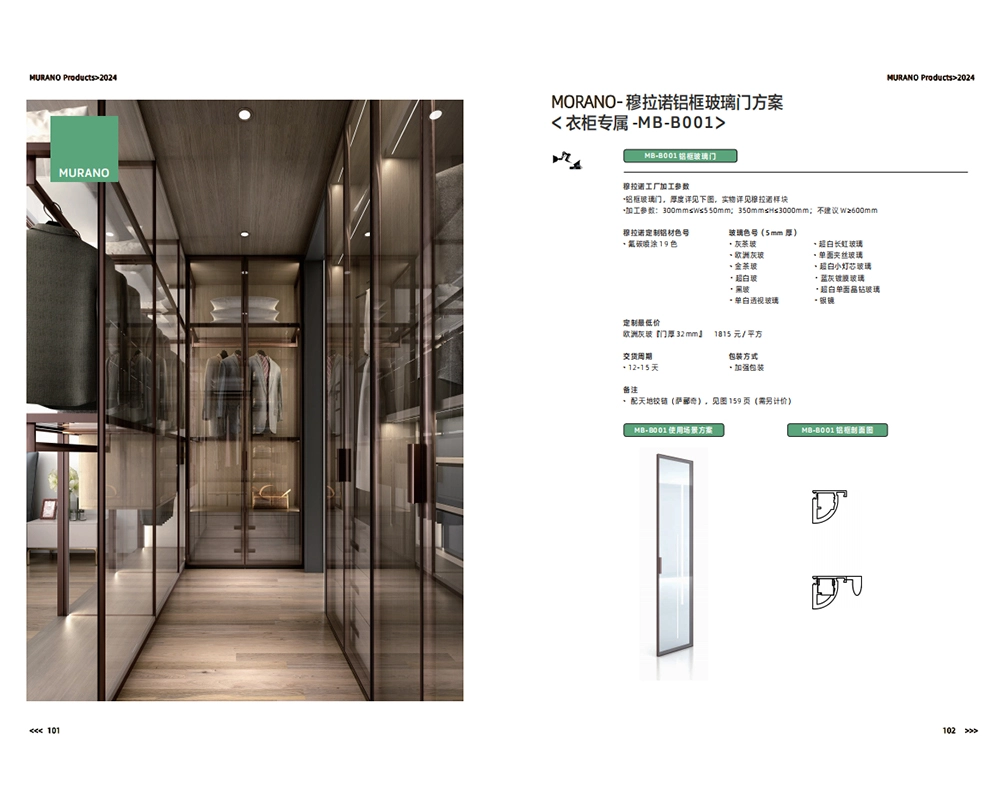
Aluminum Frame Glass Hinged Door - MBB001
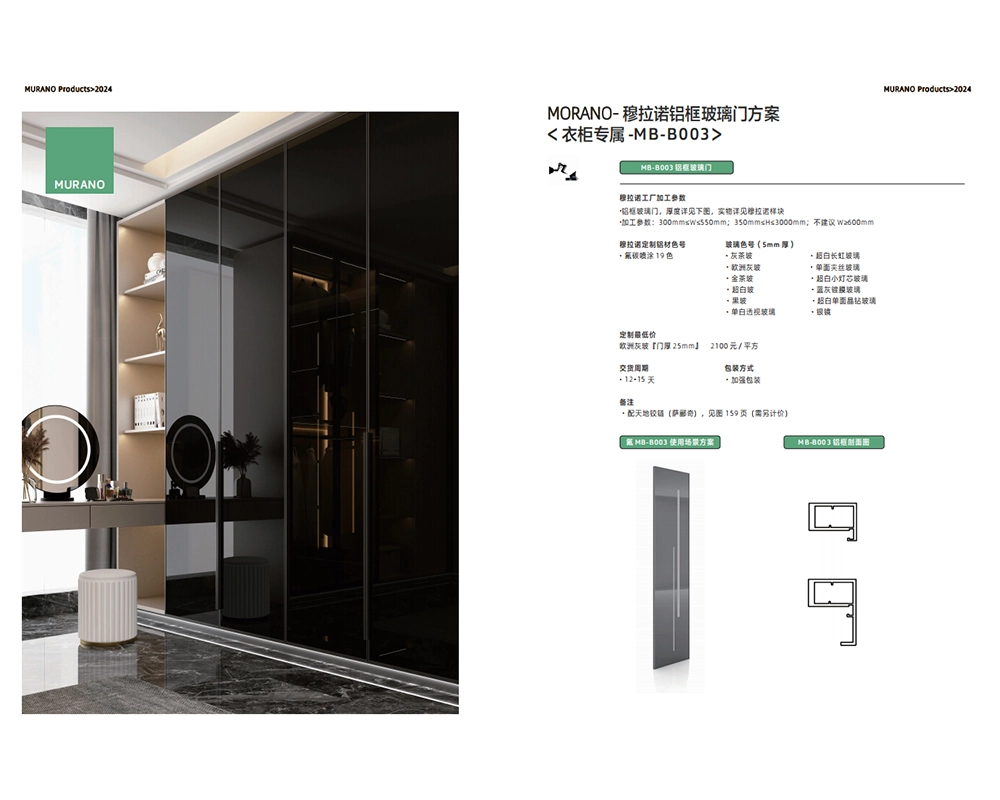
Aluminum Frame Glass Hinged Door - MBB003
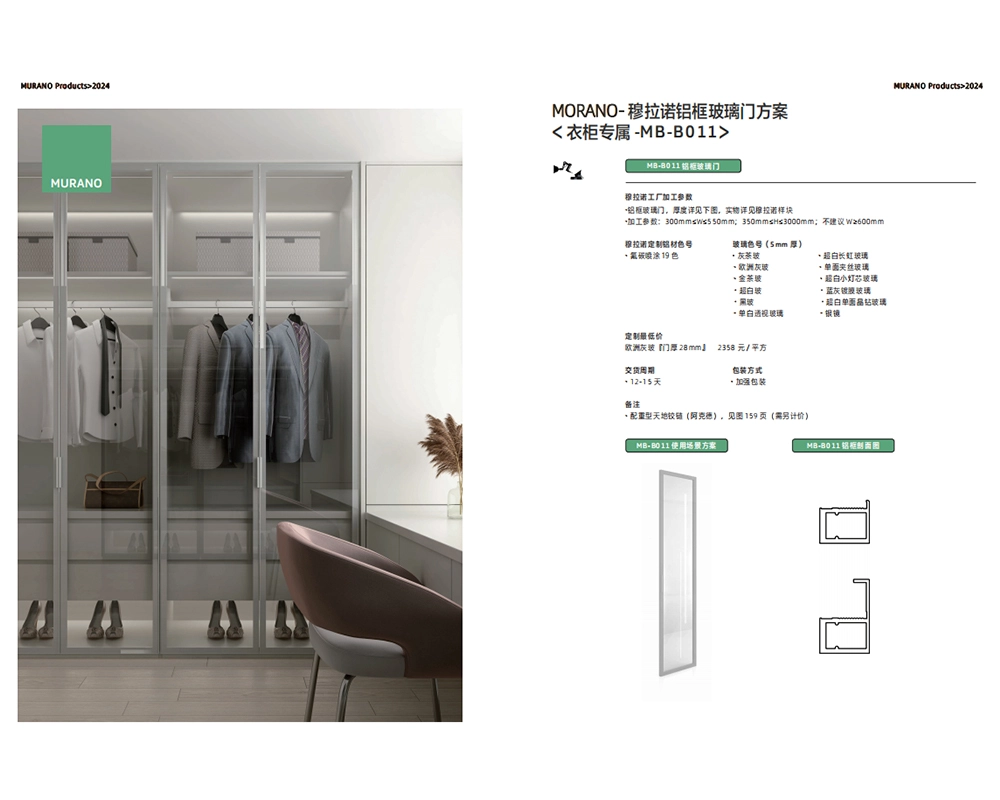
Aluminum Frame Glass Hinged Door - MBB011
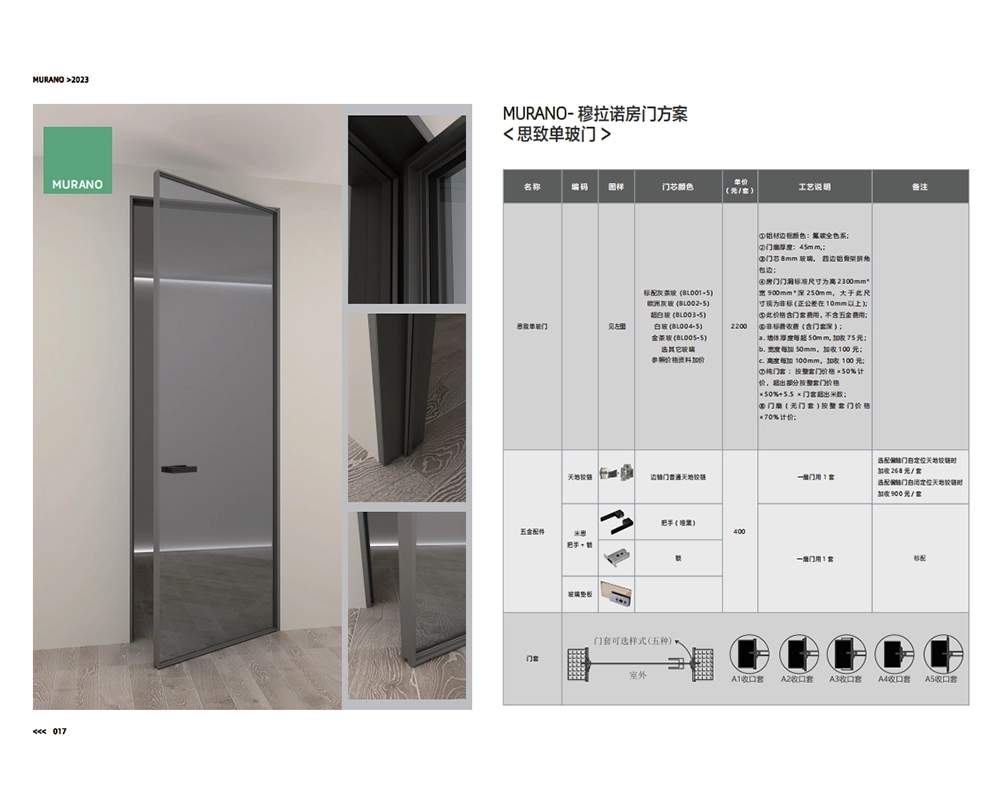
SZ Single side glass interior door
Request a Free Consultation And Price Estimate
Get in touch with Murano today for a personalized consultation, and let us bring your vision to life. Fill out the form below or contact Murano directly to start your journey toward a beautifully tailored home!"

 Scan QR Code
FoshanMuranoCabinet
foshanmuranocabinet
Whatsapp: +8618814138020
Scan QR Code